BY KATERINA FLORES
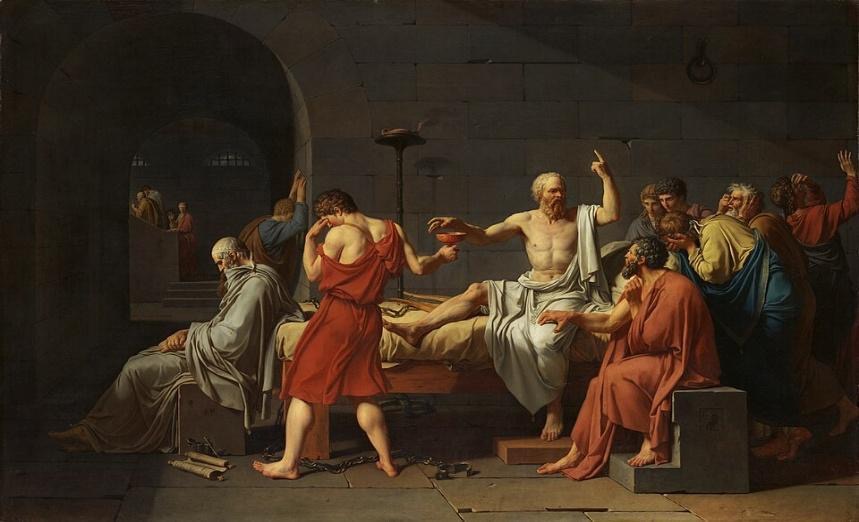
“The ultimate purpose of these sorts of debate culture, focused video sequences, is not to actually arrive at some kind of hidden truth through discourse or the Socratic method, but more so to just ritualistically humiliate your interlocutors.” – Hasan Piker, The Guardian
On the 23rd of October 2026, students at King’s College London turned up to their campus on the Strand to find more commotion than usual. Just opposite the St Mary le Strand Church a white tent had appeared.
Nick Tenconi, COO of Turning Point UK, was inside with a microphone.
By the time I’d arrived, swerving through clusters of tentative onlookers, the sheer noise spewing out from the stall made the actual topic of the clearly lively debate impossible to understand. Roar News, the university’s news publication, released an article later that day – documenting how, after the stall’s arrival at 11am, tensions between debater and students had risen, resulting ultimately in police presence and the throwing of a yoghurt at the Turning Point leader. Several arrests were witnessed by those present.
What was TPUK hoping to achieve with this tent? As per their website, the organisation claims itself to be a ‘civic movement defending British values, free speech, and democratic accountability.’ Below their ‘Activism’ page, a subsection called ‘Education Watch’ encourages British students to report ‘political indoctrination’ and that schools should teach you ‘how to think – not what to think.’
TPUK is not unique in its approach – Freedom Watch GB, another group adamant to ‘defend’ the United Kingdom from the dangers of ‘foreign’ influence, boasts that it is building a ‘generation of young people who think critically, speak boldly’ and ‘debate.’ Indeed, the most infamous case of this debater-stall phenomenon, TPUK’s forefather, hails from across the Atlantic, Turning Point USA. Their late founder, Charlie Kirk, The Guardian asserts ‘has pushed an entire new generation to the right’ and has done so through mastering ‘clickbait’ and his viral PROVE ME WRONG tent-and-microphone set-ups.
So – to return to my original question – what truly do these notorious tents achieve? Whilst the case on the KCL campus is hard to truly quantify – the number of shifting onlookers who truly had their minds changed by the topics of conversation at Tenconi’s stall is tricky to assess now – but from the events of the day, as well as statements Roar took from students on the scene, it is evident many within the student body were resistant to hear the views of this organisation. My own experience encountered a stall swarmed by a crowd – where many were shouting through microphones and megaphones – and with an overall atmosphere that did not purport to sustain a civic debate. Emotions were clearly high-strung.
An investigation into these Prove Me Wrong pop-ups and debate stalls quickly spirals into a deep-dive into the new ethnonationalist far-right. In looking past the masks these groups put up – of promoting critical thought and civil debate – and examining their reach on social media ultimately reveals the wilier tactics at play. The plan is to normalise and to widen that which is mainstream.
The bottom line is that these are not, and have not been, about promoting debate or conversation. Hasan Piker told The Guardian that the goal here is to humiliate your opponent, not to arrive at a ‘hidden truth’ through Socratic debate. I would like to push his argument further – that there is a ‘hidden truth’ that these stalls hope to arrive at, but it is the same one every time: extremist, far-right ideology.
Going Viral and Fragmented Conversation
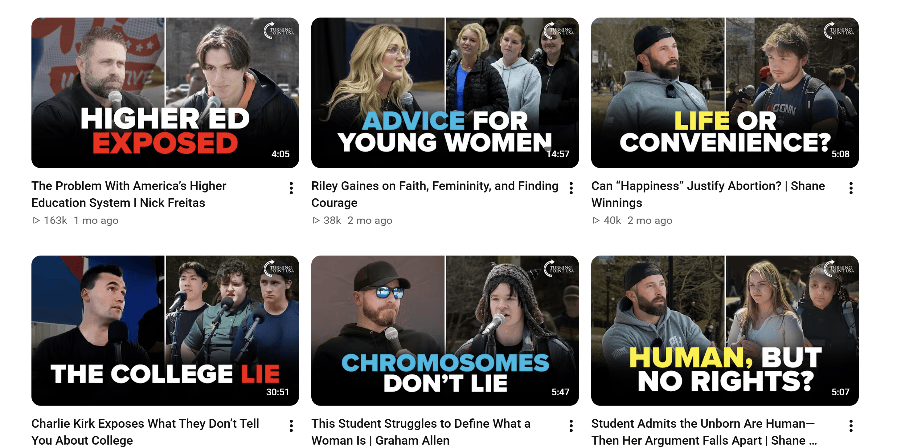
Evidence of this agenda becomes clearer when one goes online. Leaving the physical space and entering the virtual shifts the parameters – it allows those recording to craft narratives to their large following. Turning Point UK has 257,000 followers on Instagram. They were quick to post the yoghurt incident with the caption of ‘Leftist Thug Hurls Yoghurt at Nick Tenconi’; comments under the video were open in their condemnation – ‘And yet they call us on the ‘right’ violent’ one user huffed.
But the usage of these stalls, and the footage they provide, goes further than standard media sensationalism and slandering of political opponents. In line with the terminology used on their websites, organisations such as Turning Point UK and USA, Freedom Watch GB, utilise these debates to project a particular image of themselves – one that allows them to lay claim over rationality, critical thought, and logic-based argument.
How this is achieved is evident by their most viral videos. A video that was posted to the FreedomWatchGB Instagram account on the 5th October 2026 hit (as of the time of writing this article) 10.6 million views – a significant jump from the 256K views on the video before it and the 373K views on the video after. A woman debates Montgomery Toms – the founder of the group, and the ‘man in the tent’ for this organisation – on the definition of ‘British’. The woman is a person of colour, but, along with her parents also, British-born. Montgomery Toms asserts that to truly be ‘British’ one must have a ‘lineage’, a ‘collective ancestry in this country’. The woman clearly disagrees, attempting to draw a ‘yes-or-no’ answer from Toms to her question on whether to him, she is British. Toms cuts her off with a peeved ‘there’s this thing called nuance in a conversation,’ ultimately nonetheless affirming that no, she is not British. The video ends as the woman storms off, clearly irritated. The comments under this video are full of users ridiculing her attitude – ‘she doesn’t know what she’s angry about’ says @official_only_bants, with a laughing emoji. This was only a repost – on the 28th of August it achieved 30.2 million views.
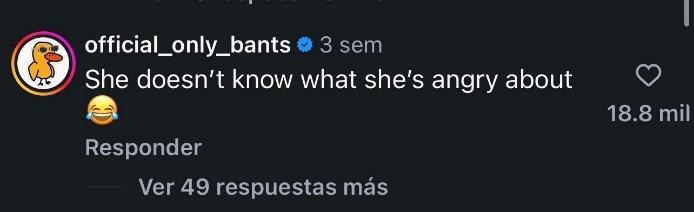
Explosive videos such as these are a staple across their social media account and often those most watched. An Angry Opponent versus Toms – who is more than happy to teach them a lesson.
A pattern also emerges in their recent posts – in comparing how much airtime Toms gets, as opposed to his opponent, an imbalance is clear. A video on Instagram from the 28th October, with a caption of ‘British Values Don’t Make You British,’ the opponent gets 22 seconds in a video of 2 minutes 18 seconds. 25th October, ‘Mass Migration Destroys Nation,’ a measly 2 seconds in a 56 second video. 22nd October, ‘Legal Migration is More Harmful than Illegal,’ 22 seconds out of a 1 minute 34 seconds. The rest of the time is devoted to Toms speaking. Suddenly, the videos are less debates and more propulsion machines for those messages in the caption.
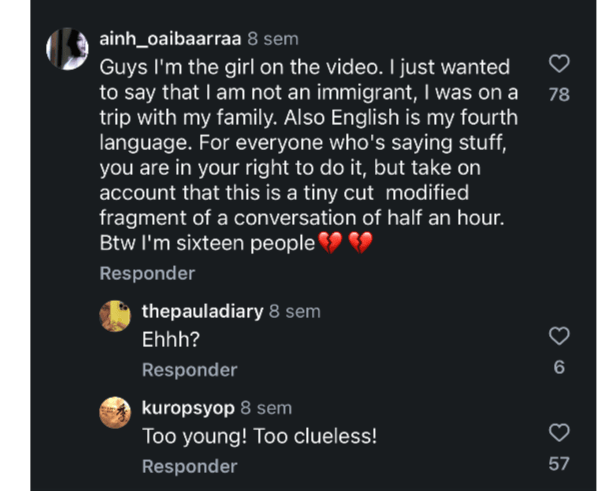
One video, from the 22nd of August, gives some insight on how these videos are used in narrative propulsion – a commenter claiming to the person in the video debated asks those ‘saying stuff’ about the video to consider that the clip is ‘a tiny cut modified fragment of a conversation of half an hour.’
Turning Point UK’s Instagram appears to be less co-ordinated, oft simply schmoozing off the content churned out by its American branch, but nonetheless similar videos are present. In a video posted on the 23rd October, over a debate on abortion, TPUK’s debater, clearly enraged by the woman arguing a pro-choice argument before him, snaps ‘I’m not going to give you airtime,’ and ‘I’m done with you,’ before the video cuts as she opens her mouth to rebut.
The Digital War Room
In 2008, Richard B. Spencer coined the term of the ‘alt-right’ as a ‘catch-all for a variety of voices at odds with the [mainstream] conservative establishment.’ Groups under this moniker aim to ‘reinject their implicit (and sometimes explicit) racist and anti-Semitic views into mainstream conservative discourse, extending the culturally accepted political scale further to the right.’ Today, these groups are proliferating online – operating in loosely organised structures, radicalised individuals, and organisations that are not necessarily tied to political parties – such as the groups that have been discussed thus far in this work.
HOPE not Hate reports on the far-right’s digital tactics for expansion. In their 2026 annual report, their data findings uncovered how ‘the firewall between fringe extremism and mainstream UK politics has been increasingly dismantled.’ Far-right groups online are hijacking social media algorithms and dressing extremist pipelines in the masks of conspiracy theories, memes, and normalised violence turned into entertainment. Having turned their eyes to snagging the younger generation, HOPE not Hate asserts how far-right groups slowly draws youth in through ‘engagement bait’ and ‘narrative laundering.’ The latter has resulted in a 187% increase ‘in the use of sanitised terms like “demographic change” to mask far-right theories.’ The war for Gen-Z’s attention is being fought online – and the nationalist right is fighting hard. Alongside cloaking its rhetoric in more palatable terms, the far-right dresses itself in mainstream symbols – the Union Jack or cross emojis – and these tents are no different. In flooding algorithms with videos of a cool-headed, suit-wearing debater, sandwiching his theories of the ‘Great Replacement’ between classical ideas on the free market and limited government, against the angry, emotional – likely inexperienced in debate – university student, the far-right normalises itself in the mind of the viewer and associates itself with rationality and logic. It also assumes definitions for things that are, ironically, debatable. For example, whilst what makes someone British is argued over in these videos – the way in which each side is presented does much to suggest that there is, ultimately, a right answer to the question.
This is not to deny the agency of those they debate – or to assume that those on the left politically cannot be emotional and even extremist in their ideas – and indeed they film real people and hence narrative construction in these scenarios is not the complete monopoly of those setting up these tents. These tents are put up – usually – in public spaces and anyone can stop by and take a turn at the microphone; no one is forcing them to say anything.
Nonetheless, the simple fact that these are filmed, spliced, posted and re-posted highlights that not only do these organisations see importance in their presence on social media, but that decisions are being made in which clips are reaching the virtual world. Nor do commenters seem interested in the debate itself or a duel of rhetorics – one side is accepted as right, the other as misinformed and, frankly, stupid.
Conclusion
In co-opting the terminology, aesthetics, and dimensions of principles such as ‘free speech’, debate, and critical reasoning, far-right movements in the UK and US, which fundamentally base themselves in fear driven, prejudiced, and xenophobic ideologies, are able to legitimise themselves and move closer and closer to mainstream politics. The debater-style tents help to achieve this – particularly with the reach they have on social media. By recording themselves they can splice and select clips which position themselves as the level-headed, fact-based debater, and their opponent – angry and emotional.
Fundamentally, these tents are not about debating, and neither about spreading ideology in the sense of changing peoples’ minds through clever rhetoric, rather, they are about shifting and creating narratives – where the appearances of the debate and debaters are more important than the contents of the debate itself. In doing so, they only serve to fuel the global swell of nationalist thought gaining steam in the world today.
Bibliography
Azani, Eitan, Liram Koblenz-Stenzler, Lorena Atiyas-Lvovsky, Dan Ganor, Arie Ben-Am, and Delilah Meshulam. “The Development and Characterization of Far-Right Ideologies.” In The Far Right — Ideology, Modus Operandi and Development Trends, 13–36. International Institute for Counter-Terrorism (ICT), 2020. https://www.jstor.org/stable/resrep30906.6.
Collins, Matthew, Gregory Davis, Anki Deo, Amelia Hart, Paul Kershaw, Georgie Laming, David Lawrence, et al. State of Hate 2026: It Could Happen Here. Edited by Nick Lowles and Joe Mulhall, 2026. https://hopenothate.org.uk/app/uploads/2026/03/state-of-hate-2026-PDF.pdf.
David. The Death of Socrates. Oil on canvas, 1787. New York. Metropolitan Museum of Art. <a href=“https://commons.wikimedia.org/wiki/File:David_-_The_Death_of_Socrates.jpg“>Jacques-Louis David</a>, Public domain, via Wikimedia Commons.
Demopoulos, Alaina. “Virulent Debater and Clickbait Savant: How Charlie Kirk Pushed a New Generation to the Right.” The Guardian. The Guardian, September 12, 2025. https://www.theguardian.com/us-news/2025/sep/12/charlie-kirk-young-conservatives-social-media.
Freedom Watch GB. “@Freedomwatchgb.” Instagram. Accessed November 2, 2026. https://www.instagram.com/freedomwatchgb/.
Freedom Watch GB, and Montgomery Toms. “The Youth Voice of Britain.” Freedom Watch GB. Accessed November 2, 2026. https://www.freedomwatchgb.com.
Speri, Alice. “How Charlie Kirk Turned Campuses into Cultural Battlefields – and Ushered in Trump’s Assault on Universities.” The Guardian. The Guardian, September 13, 2025. https://www.theguardian.com/us-news/2025/sep/13/charlie-kirk-campus-culture-wars.
Steiner, Isabella, Lily-Rose Chapman, and Jonathan Mong. “Chants, Megaphones and Yoghurt: Turning Point UK’s King’s Stall Descends into Chaos.” Roar News, October 23, 2026. https://roarnews.co.uk/2026/chants-megaphones-and-yoghurt-turning-point-uks-kings-stall-descends-into-chaos/.
Turning Point UK. “@Tpointuk.” Instagram. Accessed November 2, 2026. https://www.instagram.com/tpointuk/.
———. Accessed November 2, 2026. https://www.tpointuk.co.uk/chapter/.

