BY Sinamaline Khuong
Background
Chinese soft power has shifted notably among young Americans in recent years. In particular, social media platforms TikTok and RedNote (Xiaohongshu) have helped popularise “Becoming Chinese”, an internet trend centred on adopting Chinese lifestyle habits and an overall appreciation for Chinese culture, society, and philosophy.
The politicisation of Chinese identity as a threatening ‘Other’ has long contributed to American national self imagination. In the post-Cold War era, the middle kingdom’s growing economic capabilities were even framed as inherently irreconcilable with U.S. continuity. Emerging cultural engagement through Chinamaxxing, therefore raises critical questions about how rigid this identity division really is.
Construction of the Chinese ‘Other’
Despite economic rapprochement during the Second Trump Administration, a Chinese ‘threat’ remains ever-present in American political discourse. The “China threat” can be traced back to the ideological divisions of the Cold War, during which the U.S. positioned itself as the primary defender of the liberal democratic order against the communist states. This ideological distinction became central to American national self-imagination, where an external ‘Other’ constructed on the basis of linguistic, religious, historical, and/or geographical factors played an integral role in consolidating a cohesive sense of national identity.
A contemporary manifestation of this conflict appears in Executive Order 14352, ‘Saving TikTok while protecting National Security’, which sought to address so-called national security concerns surrounding TikTok’s Chinese ownership through a proposed divestiture arrangement. The phrases “foreign adversary controlled applications” and “national security concerns” show how Chinese technological influence is portrayed as a source of national vulnerability, reinforcing the construction of China as a threatening external ‘Other’ to be cautious of.
Chinamaxxing and Changing Perceptions
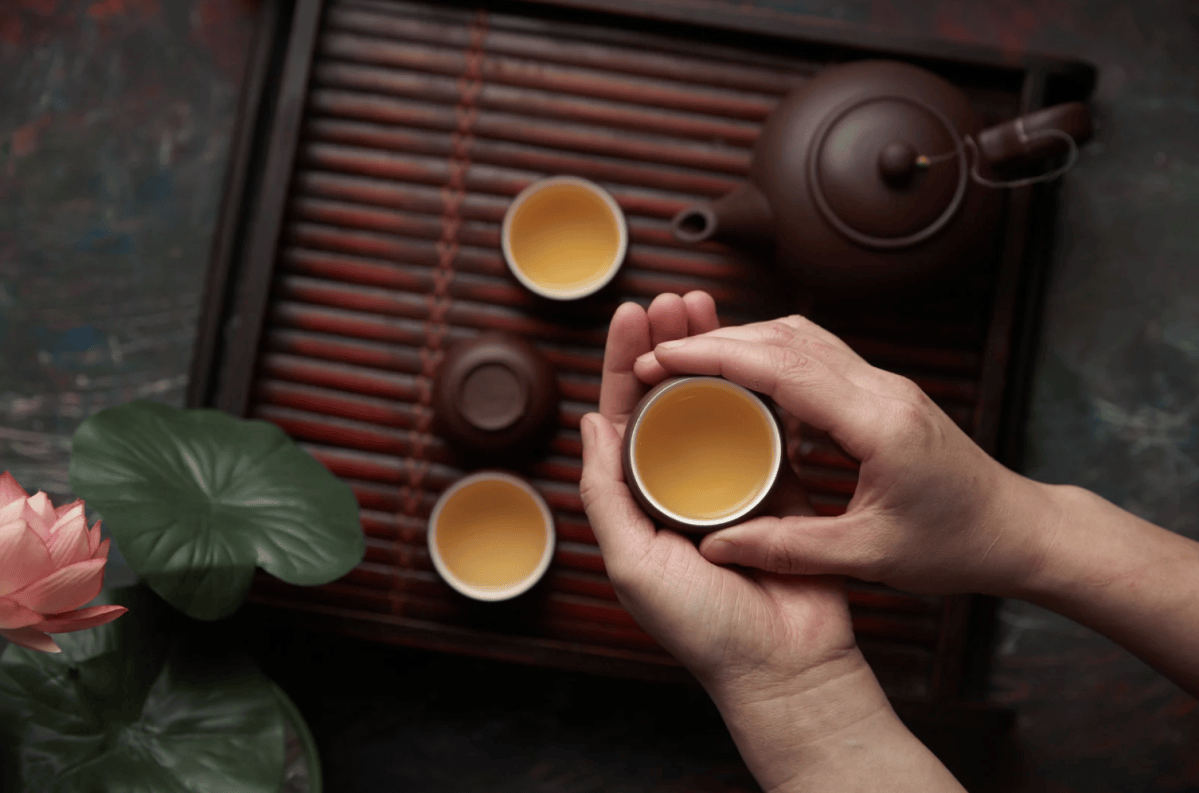
TikTok has simultaneously facilitated cultural engagement with China among younger Americans, challenging the notion that the Chinese ‘Other’ remains a uniform threat across American national imagination. On social media, Gen Z users are engaging in ‘Chinamaxxing’ and phrases such as “In a very Chinese time of my life” alongside Chinese daily practices such as drinking hot water, learning Mandarin and performing traditional qigong exercises (a traditional mind-body practice), signalling a mellowing of attitude towards Chinese culture, and a seeping influence of Chinese soft power.
On top of this, some commentators have come to perceive this current as a response to growing disillusionment with the West, potentially stemming from dissatisfaction over Trump’s governance, and an overall ideological rejection of the U.S.-led liberal order.
The fragmentation of the narrative of a Chinese ‘other’ that American leaders have inherited and upheld for decades can be attributed to the increasing embrace of Chinese soft power by younger generations. According to Nye, culture encompasses practices that create meaning for a society. He distinguishes between high culture such as literature, art, and education, which appeals to elites; and popular culture, which focuses on mass entertainment. Chinamaxxing then illustrates popular culture’s growing influence in shaping international perceptions beyond official messaging channels. This is further amplified by content creators such as IShowSpeed and Hasan Piker, whose visits to China have introduced a more accessible, every-day version of China, beyond politics to millions of online viewers.
Implications for American Identity
Politics in an information age has become a credibility contest. Building on Arquilla and Ronfeldt, Nye determines that international competition may ultimately depend on “whose story wins”. Governments compete not only through economic and military capabilities, but also through their ability to shape perceptions and narratives. While it was relatively simple to politicise the enemy in the past, ‘Chinamaxxing’ reveals the limits political leaders face when constructing an image of a foreign ‘Other’. While the official discourse may be that China is a dangerous threat, what does it really take for such narratives to gain popular acceptance?
More importantly, this suggests that the boundaries between the American ‘Self’ and Chinese ‘Other’ are not as clear-cut as political discourse may imply. Trump himself has adopted a friendlier stance towards China, emphasising his ‘personal ties’ with Xi, which some reports suggest has prompted a more positive perception of China among Americans. In a report by the South China Morning Post, a former China official on President Joe Biden’s National Security Council further described the visit as Trump’s version of ‘Chinamaxxing’, raising broader questions about the the future of U.S. foreign policy and the sustainability of its longstanding narrative going forward.
Nonetheless, cultural admiration should not be mistaken with formal political identification, as partaking in a robust internet trend centred on adopting Chinese lifestyles does not imply support for Beijing’s policies or dismantle geopolitical concerns underpinning U.S.-China rivalry. It does, however, raise questions about the effectiveness of using the “China threat” narrative as a tool for collective national identity, and whether the U.S. might find more success constructing such identity through alternative channels.
Bibliography:
Fedorov, Andrew. ‘Why Internet Stars Are Chinamaxxing.’ GQ, February 12, 2026. https://www.gq.com/story/why-internet-stars-are-chinamaxxing
Fu, Hualai. ‘How National Identity Explains the US and Chinese Foreign Policy in Asia-Pacific? (Post-Cold War to 21st Century).’ Cambridge Journal of China Studies 13 (2018).https://doi.org/10.17863/Chttps://doi.org/10.17863/CAM.42323AM.42323.
Nye, Joseph S., Jr. ‘Public Diplomacy and Soft Power.’ The ANNALS of the American Academy of Political and Social Science 616, no. 1 (2008): 94–109. https://doi.org/10.1177/0002716207311699.
‘Polls: U.S., China, Trump and Xi.’ New York Times, September 23, 2026. https://www.nytimes.com/2026/09/23/us/politics/polls-us-china-trump-xi.html.
Razdan, Khushboo. ‘Is Donald Trump’s ‘Chinamaxxing’ Pushing Beijing’s Soft Power?’ South China Morning Post, October 31, 2026. https://www.scmp.com/news/china/diplomacy/article/3372691/donald-trumps-chinamaxxing-pushing-beijings-soft-power.
‘The ‘Becoming Chinese’ Trend and Beijing’s Soft Power Shift.’ East Asia Forum, April 8, 2026. https://eastasiaforum.org/2026/04/08/the-becoming-chinese-trend-and-beijings-soft-power-shift/.
The White House. ‘Saving TikTok While Protecting National Security.’ Executive order, September 2025. https://www.whitehouse.gov/presidential-actions/2025/09/saving-tiktok-while-protecting-national-security/.
Tong, Yue. ‘The Crisis of National Characteristics and the Construction of National Identity—Based on Who Are We?’ The Frontiers of Society, Science and Technology 2, no. 16 (2020): 116–21. https://francis-press.com/index.php/papers/3234.
Zhang, Zoey. ‘Cultural Currents: How ‘Becoming Chinese’ Trend Is Transforming Western Lifestyles.’ South China Morning Post, February 7, 2026. https://www.scmp.com/news/people-culture/china-personalities/article/3342243/cultural-currents-how-becoming-chinese-trend-transforming-western-lifestyles.

