
By Zayd Riaz
In order to reap change within a society, you create a rhetoric that threatens the very thing that keep the people alive and stable: their identity. The politization of masculinity within 1950s America will be the concept under scrutiny today. Masculinity is an essential foundation in which males throughout history have used to build their identities, to build a sense of self that provides them an existential sense of security. They use it as a benchmark for “success”, which they then measure themselves against to value their self-worth. It is a value that justifies their sense of being, their actions, relations and beliefs. Essentially it is the thing that gives most men their meaning, gives them consolation or the belief that they are something in this world, it gives them a value, a direction, a purpose, in an existentially meaningless world. It is essentially the chief cornerstone of many modern male identities, especially in 1950s America.
The securitised rhetoric during the McCarthy era was instrumental in the curation of an idealised masculine archetype. Coupled with the rhetoric of fear, there was more at stake to conform to such identities in the name of National Security. J Edgar Hoover (FBI director) asserted, “Most communists are ordinary looking people like your seatmate on the bus or a clerk in one of your neighbourhood stores”.1 Thus, how a “true American” was differentiated was via their actions and beliefs. The McCarthy Show trials in conjunction with media propaganda, helped curate a discourse that distinguished between moral and immoral lifestyles and normal and abnormal mentalities; hence what’s masculine and what’s not. What was interesting was the McCarthy anti-communist discourse demonised the old liberal foreign policy of post-war Isolationists, it was characterised as effeminate. By doing so it provided a new identity of masculinity that was synonymous with anti-communist foreign policy strategies, which was expansionist and hawkish, offering a symbol of the strong American man who protects freedom, democracy, and capitalist enterprise with an iron fist.
The demonisation of Alger Hiss represented the template of the “other”. The McCarthy show trials characterised him as weak and effeminate. His liberal isolationist stances were branded as “soft, and weak willed” and was labelled a “treasonous eastern establishment liberal, whose softness left him prone to transgressions of political, moral and perhaps even sexual nature”.2 As a result, men fearing for their own sense of masculinity, and hence self-identity felt unconsciously compelled to adopt more masculine characteristics which meant to adopt more hawkish foreign policy stances. To be seen as soft on Communism was seen as weak. Astonishingly the 88% pro-isolationists, liberal stance switched to 65% in favour of non-isolationist anti-communist policies over the course of 1950s.3 Furthermore, behaviours such as excessive consumption of alcohol were categorised as indicative of weakness and associated with Bolshevism. Homosexuality in particular was subjected to negative portrayals; for example, the New York Post suggested a connection between homosexuality and communist subversion, asserting that “you can’t actually separate homosexuals from subversives… A man with low morality is a menace in government.”4 Anti-communist discourse frequently linked perceptions of sexual “perversion” with concerns about communist influence, implying that “those who engage in overt acts of perversion lack the emotional stability of a normal person.”5
This was also a key critique of the women’s liberation movement. Anti-communist rhetoric framed the nuclear family as the epitome of democratic principles, in which the American man was in charge of protecting. Hence, any challenge to the nuclear family was considered subversive or communist, a threat to the sovereignty of the American’s man home, and really his masculinity. This also had trickling effects on the concept of femininity too. The female was re-framed as the nucleus of
spiritual and moral virtue inside the nuclear family, safeguarding the family from moral decay. Hence it was the “duty” of the American man to protect the fragile beauty within his home. Thus, anti- communist discourse associated female empowerment with “polygamy, free love, and the disruption of the household,” connecting it to communist subversion of domesticity.6 As a result, the narrative constructed an image of the “True American” man as a heterosexual, father, a strong patriarchal leader who defended his home against the sexual depravity of Marxism. It was this image glamorised by the American power establishment that American males were hurrying to emulate, as it gave them a sense of meaning and security. McCarthyism gave the script, story line and character tropes for men to enact. The image was, the “strong” American man protecting his home, his family, his wife, from the communist hoards. Now that is a character most men would adopt, a character doing his noble duty, fighting in the way of truth, freedom, and justice. People like the idea of fighting against ” injustice” to prop up their own sense of self-worth, to justify their existences and actions; and nothing justifies a human being and his actions more than fighting against injustice.
The American man protected his family, and thus protected America, kept his wife in check, and was branded ‘hard” on communism as a result. We can see that the concept of masculinity was rather the beating heart of many men’s identities during McCarthyism, hence any threat to their masculinity would form cascading effects where men would adopt actions and beliefs that would ensure the safeguarding of their “perceived masculinity”. Even if it took stifling other people’s rights to do so, but not to worry, “it was a noble duty” to do so, a sign of strength, and as this blog has indirectly shown, that’s the problem with securitised discourse. Turning irrational fear including the hateful actions that follow, and re-framing it as a strong and noble cause, hiding the very weak-willed people who follow it. McCarthyism shows the fraud of nobility, the fraud of “strong men”, it is just an idea, an illusion, followed by the very “soft and effeminate men” who need such certainty in being, and are anything but. Chasing an ideal doesn’t make you the ideal, but we live in a world of perception and to “show” yourself as strong is all you need to get by; convince others so you can convince yourself. It’s funny because McCarthyism wasn’t motivated by love of America, or any notion of truth, justice, freedom etc. Those may be the tailored sound bites which people repeat to enact their own “movie”, to make their identity seem real, to be perceived as a “strong, noble and a true American”. But McCarthyism was just motivated by people, who were scared of being the other, chasing the next masculine trend for their own sense of self-worth and existential security, rather than for justice and truth. McCarthyism was fought by people just protecting their sense of selves, people fighting for themselves and only themselves, and that’s the sad part; we can blame propaganda and the subversive state apparatus all we want, but we as individuals freely allow it, we need the identities the state creates for us.
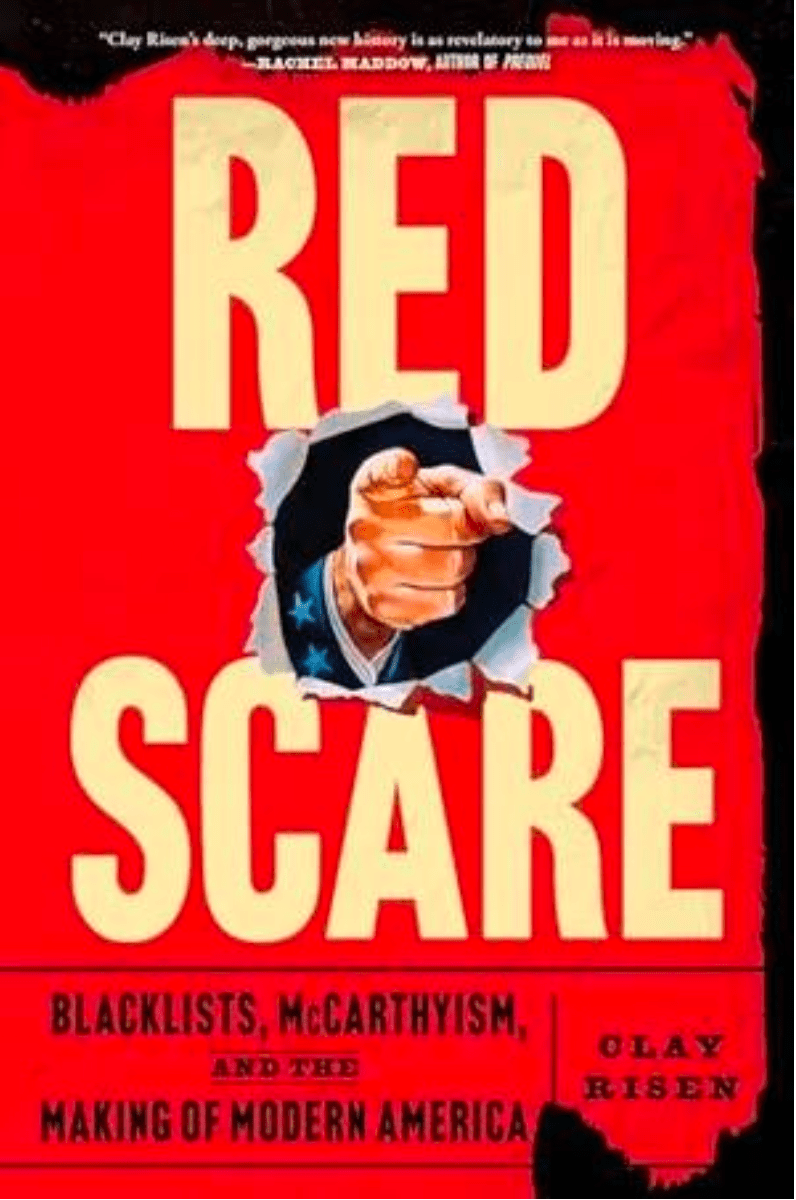
It is unfortunate however, that this is a problem that will replicate itself wherever there are men, or rather wherever there are humans. In the name of ontological security, we go with the herd, we conform to the dominant prescription of identity espoused by the “Regime of Truth” in our community. As a result, we wear the suits tailored for us by the security actors, and at the same time we adopt the mannerism and beliefs that shape our actions necessary for such security. Anthony Giddens argues this is a natural drive as “individuals need to feel secure in who they are, as identities or selves.”7 According to Mitzen, this is essential for the individual to experience and to think one has agency and control over their lives, which is impossible without a sense of security.8 Hence the identity we subsume provides us with a worldview and therefore shows us how to act therein. Hence identity is crucial for our own sense of selves and how we navigate the world. It gives us meaning in our lives, as well as something to pursue and belong to. Thus, when an identity becomes politicised in the name of National Security, people will quickly adopt and wear the new suit required, as it is essential for the security of their own sense of self, without which we are nothing, naked for everyone to judge and outcast. Hence, the cycle will always perpetually repeat itself; where there are desperate, fearful people there will always be times like McCarthyism. The antics of the Red Scare show how deeply entrenched the link between identity and security is.
1 ROBERT GENTER, “Removing the Mask of Sanity: McCarthyism and the Psychiatric–Confessional Foundations of the Cold War National Security State,” Journal of American Studies 52, no. 04 (July 10, 2017): 1066–94, https://doi.org/10.1017/s0021875817000950.
2 K. A. Cuordileone, “‘Politics in an Age of Anxiety’: Cold War Political Culture and the Crisis in American Masculinity, 1949-1960,” The Journal of American History 87, no. 2 (September 2000): 515, https://doi.org/10.2307/2568762.
3 Steve Crabtree, “The Gallup Brain: Americans and the Korean War,” Gallup.com, February 4, 2003, https://news.gallup.com/poll/7741/gallup-brain-americans-korean-war.aspx.
4 K. A. Cuordileone, “‘Politics in an Age of Anxiety’: Cold War Political Culture and the Crisis in American Masculinity, 1949- 1960,” The Journal of American History 87, no. 2 (September 2000): 515, https://doi.org/10.2307/2568762.
5 Ibid page 525.
6 Ibid page 526
7Steele, B.J. (2008). Ontological Security in International Relations. Routledge.
8Mitzen, J. (2006). Ontological Security in World Politics: State Identity and the Security Dilemma. European Journal of International Relations, 12(3), pp.341–370. doi:https://doi.org/10.1177/1354066106067346.
Bibliography
1. 5. Aho, K. (2023). Existentialism. [online] Stanford Encyclopedia of Philosophy. Available at: https://plato.stanford.edu/entries/existentialism/.
2. Cuordileone, K.A. (2000). ‘Politics in an Age of Anxiety’: Cold War Political Culture and the Crisis in American Masculinity, 1949-1960. The Journal of American History, 87(2), pp.515– 545.
3. Mitzen, J. (2006). Ontological Security in World Politics: State Identity and the Security Dilemma. European Journal of International Relations, 12(3), pp.341–370. doi:https://doi.org/10.1177/1354066106067346.
4. Steele, B.J. (2008). Ontological Security in International Relations. Routledge.
5. Steve Crabtree, “The Gallup Brain: Americans and the Korean War,” Gallup.com, February 4, 2003, https://news.gallup.com/poll/7741/g
 Identity Hunters