
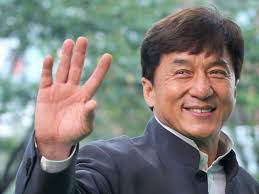
Jackie Chan once conquered audiences with his humour, playfulness, and flexible martial arts moves. He fell and bruised his face in Police Stories and subdued gangsters with nunchakus in Rumble in the Bronx, showing the witty, smooth, and slightly flexible Chinese male charm. This image fits China’s soft-power diplomacy strategy at the time, which emphasised integration into globalisation. However, Wu Jing’s “Wolf Warrior” series completely subverted this style—with a cold gaze, a steely will, and a taut fighting posture, he engaged in bloody battles under a hail of bullets, demonstrating a strong national will. This transformation of Chinese masculinity on the screen is a microcosm of China’s rise from cultural export to national self-confidence.
In Jackie Chan’s films, the heroes he portrays never fight violence but rather resolve crises with wit, flexibility, and humour. In Rumble in the Bronx, he is caught up in a New York gang fight but still avoids direct conflict, dealing with it with agile action scenes, clever language, and humour; in Rush Hour, he and his African-American partner have a cultural clash and finally solve the problem through cooperation. This non-aggressive, non-political image is a microcosm of China’s diplomacy during the globalisation wave from the 1980s to the 2000s (1). At the time, China was promoting economic reforms, seeking integration with the world, and emphasising a “peaceful rise” rather than confrontation. Jackie Chan’s international success also helped China shape a national image of being “harmless, friendly, and adaptable” rather than a nationalist fighting posture. In his films, China is not a force that challenges the international order but a partner that integrates into the world and shares prosperity, which is in line with the political propaganda narrative of the Chinese government at the time (2).
If Jackie Chan’s films create a Chinese hero who adapts to globalisation, then Wu Jing’s screen image is completely different—his characters can be said to be full of patriotism, resolute, courageous, and even willing to sacrifice their lives for the country. In “Wolf Warrior”, Leng Feng bravely ventures into enemy territory, protecting the dignity of the motherland with a sincere heart; in “Changjin Lake”, he bravely battles through the ice and snow, demonstrating unwavering national integrity. This militarised, heroic male image is highly consistent with China’s increasingly tough global posture in the 2010s (3). Against the backdrop of the country’s increasing emphasis on sovereignty, security, and military strength, Wu Jing’s films have become important carriers of patriotic propaganda, gaining official support and resonating with the government’s “dream of a strong country” (4). Compared with Jackie Chan’s internationalisation route that relies on the commercial market, Wu Jing’s films are more national narratives, using military victory and national pride to fight against Western discourse and catering to the younger generation’s recognition of national power in the intensified competition between China and the United States (4). His rise is not only a change in screen style but also a symbol of China’s political identity transformation.

Figure 1: Promotional image of Jackie Chan and Chris Tucker in Rush Hour. Source: McCormick, C. (2024). Rush Hour: 30 Funniest Quotes. Screen Rant. Available at: https://screenrant.com/rush-hour-funniest-james-carter-lee-quotes/ (Accessed: 23 March 2025).
In contemporary China, movies are no longer just entertainment tools but have become an important front for the export of national ideology (5). From Jackie Chan’s humour, flexibility, and international style to Wu Jing’s iron-blooded, disciplined, and patriotic feelings, the deep involvement of the state in cultural narratives lies behind this transformation of male images. Through censorship mechanisms and policy support, the government guides film and television content to move closer to militarisation and nationalism, and the soft “world citizen” is gradually replaced by the “warrior citizen” (6). In the narrative of “Wolf Warrior”, loyalty, sacrifice, and national supremacy have become the main themes and are enthusiastically sought after by young audiences (3). This acceptance and resonance not only reflect the change in public tastes but also deepen a collective political identity, with national identity at its core (6).

Figure 2: Promotional still from Wolf Warrior 2 featuring Leng Feng in combat. Source: Barber, J. (2017). ‘Wolf Warrior 2 & the Rise of China’. Military.com. Available at: https://www.military.com/undertheradar/2017/12/13/wolf-warrior-2-rise-china.html (Accessed: 23 March 2025).
As a state-led militarised masculine image takes over the mainstream, will Chinese films continue the “Wolf Warrior” trend? Or will more diverse new heroes emerge? Men on the screen are not just roles but also symbols of national identity (7). As China’s geopolitics changes, the “men” in the film will also evolve accordingly. This film’s transformation of masculinity is essentially a cultural game about shaping China’s political identity (7).
Bibliography
(1) Benson, P. (2017). Fist of Fury or Drunken Master: Masculinity, National Identity, and Contemporary China. [online] 2016, p.14. Available at: https://knightscholar.geneseo.edu/cgi/viewcontent.cgi?article=1057&context=proceedings-of-great-day.
(2) White, L. (2020). Legacies of the Drunken Master: Politics of the Body in Hong Kong Kung Fu Comedy Films. [online] University of Hawai’i Press. doi:https://doi.org/10.2307/j.ctvn5tw7n.
(3) Hu, T. and Guan, T. (2021). ‘Man-as-Nation’: Representations of Masculinity and Nationalism in Wu Jing’s Wolf Warrior II. SAGE Open, [online] 11(3), p.215824402110335. doi:https://doi.org/10.1177/21582440211033557.
(4) Yang, J. (2020). Main Melody Recomposed: Deconstructing the Wolf Warrior Phenomenon. [online] Center for the Humanities. Available at: https://humanities.wustl.edu/news/main-melody-recomposed-deconstructing-wolf-warrior-phenomenon.
(5) Yang, Y. (2016). Film policy, the Chinese government and soft power. New Cinemas: Journal of Contemporary Film, 14(1), pp.71–91. doi:https://doi.org/10.1386/ncin.14.1.71_1.
(6) Teo, S. (2019). The Chinese film market and the Wolf Warrior 2 phenomenon. Screen, 60(2), pp.322–331. doi:https://doi.org/10.1093/screen/hjz017.
(7) Cui, S. (2003). Introduction. In: Women Through the Lens. [online] University of Hawai’i Press, pp.xi–xxvi. doi:https://doi.org/10.2307/j.ctt6wqpfs.4.
Image Resources
McCormick, C. (2024). Rush Hour: 30 Funniest Quotes. Screen Rant. Available at: https://screenrant.com/rush-hour-funniest-james-carter-lee-quotes/ (Accessed: 22 March 2025).
Barber, J. (2017) Wolf Warrior 2 & the Rise of China. Military.com. Available at: https://www.military.com/undertheradar/2017/12/13/wolf-warrior-2-rise-china.html (Accessed: 23 March 2025).
 Identity Hunters