
By Aron Tisoczki
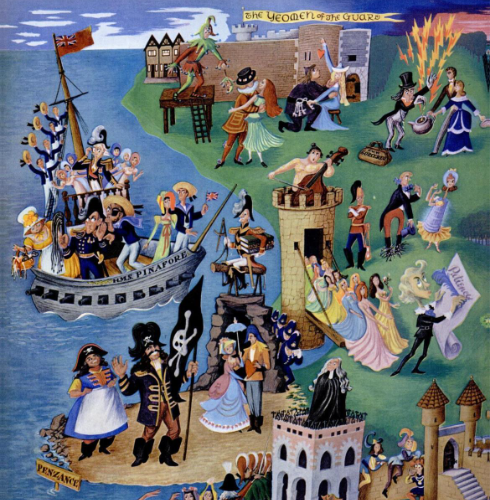
The theatrical partnership of dramatist W. S. Gilbert and composer Arthur Sullivan gave rise to a series of comic operas that have enjoyed broad success ever since their inception between 1871 and 1896. The success of these “Savoy Operas” in the English-speaking world has endured well into the twentieth and twenty-first centuries. In 1948, the annual number of their performances in the U.S. exceeded the amount of Shakespeare plays (1), whereas even today the words and music of Gilbert and Sullivan continue to influence lyricists, directors, and popular culture (2). Despite consistently mocking ‘Britishness’, the Savoy Operas are deeply tied to cultural and national identity. Gilbert and Sullivan’s operettas demonstrate how humorous critique can contribute to the construction of national identity, and create common cultural and national referents for a nation.
Critiquing Britishness
The Savoy Operas thrive on the eccentricities and paradoxes of British identity. They present incompetent naval captains (H.M.S. Pinafore, 1878), fainthearted, bumbling policemen (The Pirates of Penzance, 1879), or bureaucratic absurdities (The Mikado, 1885). The charm and distinctive topsy-turviness of Gilbert and Sullivan allowed them to use musical theatre to convey topical themes and narratives concerning British anxieties about identity and ideology (3).
H.M.S. Pinafore ridicules blind patriotism and the arbitrariness of nationality with its grand anthem “He is an Englishman”, which celebrates Englishness as if it was a personal achievement (But in spite of all temptations to belong to other nations, he remains an Englishman!) (4). The character of Sir Joseph Porter in Pinafore highlights the absurdity of leadership based on social climbing rather than competence, having attained his position without ever having set foot on a ship, but rather through naïve political manoeuvring (I thought so little, they rewarded me by making me the Ruler of the Queen’s Navee!) (5). Utopia, Limited (1893) critiques limited liability companies, but also echoes the very recent political debates on citizenship and British-Irish identity (6). Meanwhile, Major-General Stanley from The Pirates of Penzance produces perhaps Gilbert and Sullivan’s most famous parody of the officer class. He boasts of his extensive knowledge in everything, except the very military strategy he is expected to be learned in (I am the very model of a modern Major-General, I’ve information vegetable, animal, and mineral) (7). These examples all feature common Victorian anxieties about identity, respectability and social hierarchy that were emerging as Great Britain was entering the twentieth century (8).
Constructing Britishness
Through their satire, the Savoy Operas educated audiences in the symbolic content of what it means to be British, encouraging them to see themselves as part of that community (9). As English cultural identity became inextricably linked to its role within Great Britain, which it overwhelmingly directed the development of (10), it led to the unconscious assumption that English cultural identity equates to the idea of ‘Britishness’ or a British national identity (11). As the Savoy Operas were often considered to be the embodiment of English national character and cultural achievements, their global popularity meant that they were performed in a variety of social contexts, producing and re-producing ‘Englishness’ across the world (12). Through this identification, they helped to define, popularise and glorify a sense of ‘British’ identity in the eyes of their audiences, making it a common cultural and national referent for many thousands of people (13). While “He is an Englishman” may intentionally ridicule nationality, one still cannot help but feel patriotic at the sound of the stirring and triumphant piece as it proceeds into a slow and imposing march.
The endings of Gilbert and Sullivan’s works are also often left abrupt and ambiguous, meaning that all audience members, whether they agree to the critique or not, are left satisfied. For example in Pinafore, the class conflict central to the plotline is not resolved through radical change, but through the convenient revelation that the protagonist was of noble birth all along. Thus, the criticism remains, while the seemingly inevitable conflict is dissipated without taking a clear position. In this way, their works contributed to a sense of class consciousness while also constructing and maintaining a common cultural identity (14).
Conclusion
Music and theatre play a unique role in articulating and constructing national identity (15), and the Savoy Operas show how culture is a complex and powerful tool in forming national identity. Gilbert and Sullivan expose the eccentricities of British identity, but their playful satire remains central to British cultural heritage and identity. Their works highlight how through humorous critique of its idiosyncrasies, they have helped create a sense of what it means to be ‘British’, and how their widespread appeal made it a common cultural and national referent for many thousands of people.
References
- “The Land of Gilbert and Sullivan”, Life, 11 October 1948, 87.
- Michael Simkins, “Modern and major: how Gilbert and Sullivan still skewer England’s absurdities”, The Guardian, 27 October 2022.
- Ben Macpherson, Cultural Identity in British Musical Theatre, 1890–1939: Knowing One’s Place (London: Palgrave Macmillan, 2018), 12.
- W. S. Gilbert and Arthur Sullivan, H.M.S. Pinafore (1878), 20.
- Ibid., 7.
- Joël Richard, “Britishness… Limited – National identity and citizenship in Gilbert and Sullivan’s Utopia Limited (1893)”, French Journal of British Studies 21 (2016), 2.
- W. S. Gilbert and Arthur Sullivan, The Pirates of Penzance (1879), 12.
- Macpherson, Cultural Identity, 12.
- Melanie Jean Thompson, Pirates, policemen, and other patriots : late Victorian ’Englishness’ and the comic operas of Gilbert & Sullivan (Master’s Thesis), (Vancouver: University of British Columbia, 2001), ii.
- Krishan Kumar, “English and British national identity”, History Compass 4 (2006), 429.
- Macpherson, Cultural Identity, 7.
- Thompson, ‘Englishness’, ii.
- Ibid., ii.
- Macpherson, Cultural Identity, 11-12.
- Thompson, ‘Englishness’, ii.
Bibliography
Gilbert, W. S., and Arthur Sullivan. 1878. H.M.S. Pinafore. https://gsarchive.net/pinafore/pf_lib.pdf.
—. 1879. The Pirates of Penzance. https://www.gsarchive.net/pirates/pirates_lib.pdf.
Kumar, Krishan. 2006. “English and British national identity.” History Compass 4 (3): 428-447.
Life. 1948. “The Land of Gilbert and Sullivan.” 11 October: 86-87.
Macpherson, Ben. 2018. Cultural Identity in British Musical Theatre, 1890–1939: Knowing One’s Place. London: Palgrave Macmillan.
Richard, Joël. 2016. “Britishness… Limited – National identity and citizenship in Gilbert and Sullivan’s Utopia Limited (1893).” French Journal of British Studies 21: xxi-1.
Simkins, Michael. 2022. “Modern and major: how Gilbert and Sullivan still skewer England’s absurdities.” The Guardian, 27 October.
Thompson, Melanie Jean. 2001. Pirates, policemen, and other patriots : late Victorian ’Englishness’ and the comic operas of Gilbert & Sullivan. (Master’s Thesis) Vancouver: University of British Columbia.
 Identity Hunters