
By Idunn Engstad
In 2019, UEFA found Rangers FC guilty of ‘racist behaviour’, specifically sectarian chants, during a 6-0 home win against Gibraltar’s St Joseph’s in the Europa League qualifiers. Ordered to close a section of 3000 seats for their next game, chairman Dave King stated Rangers has ‘players and supporters from many religions, cultures and backgrounds but we are one and the same’ when supporting the club (PA Media, 2019). But does this inclusive image truly reflect the club’s deeper identity?
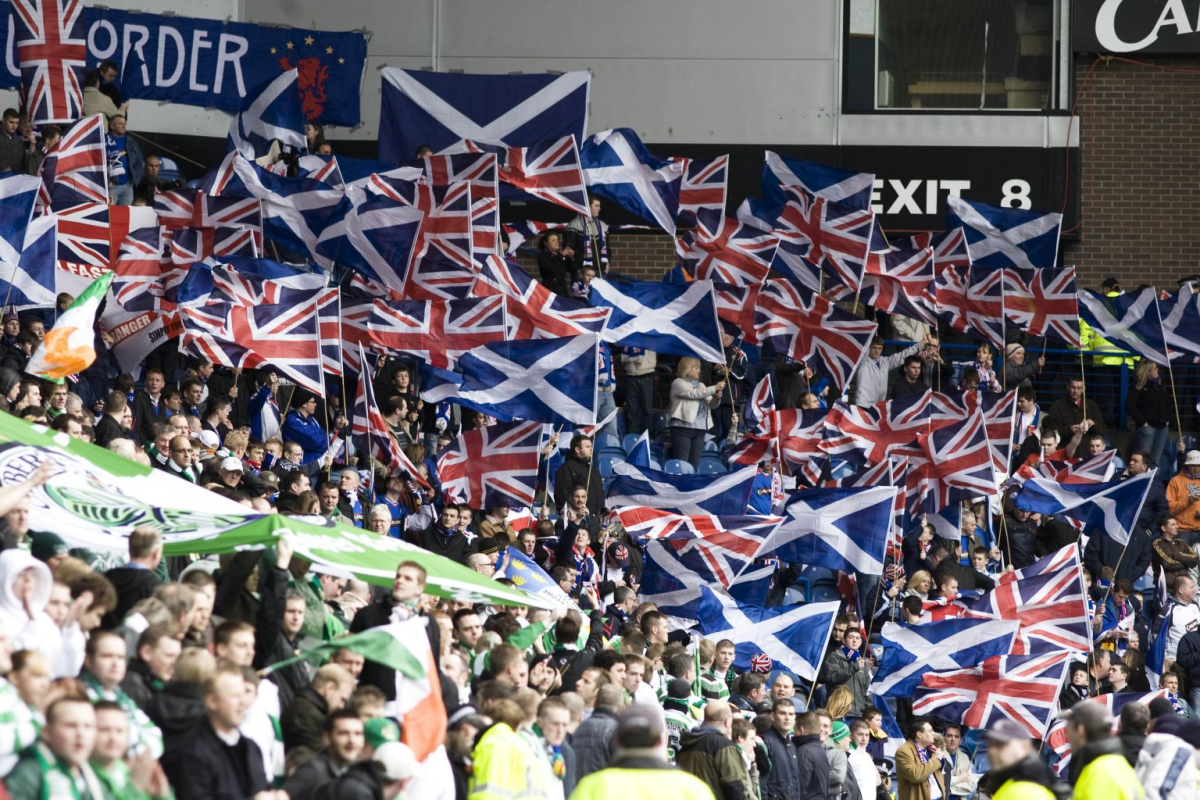
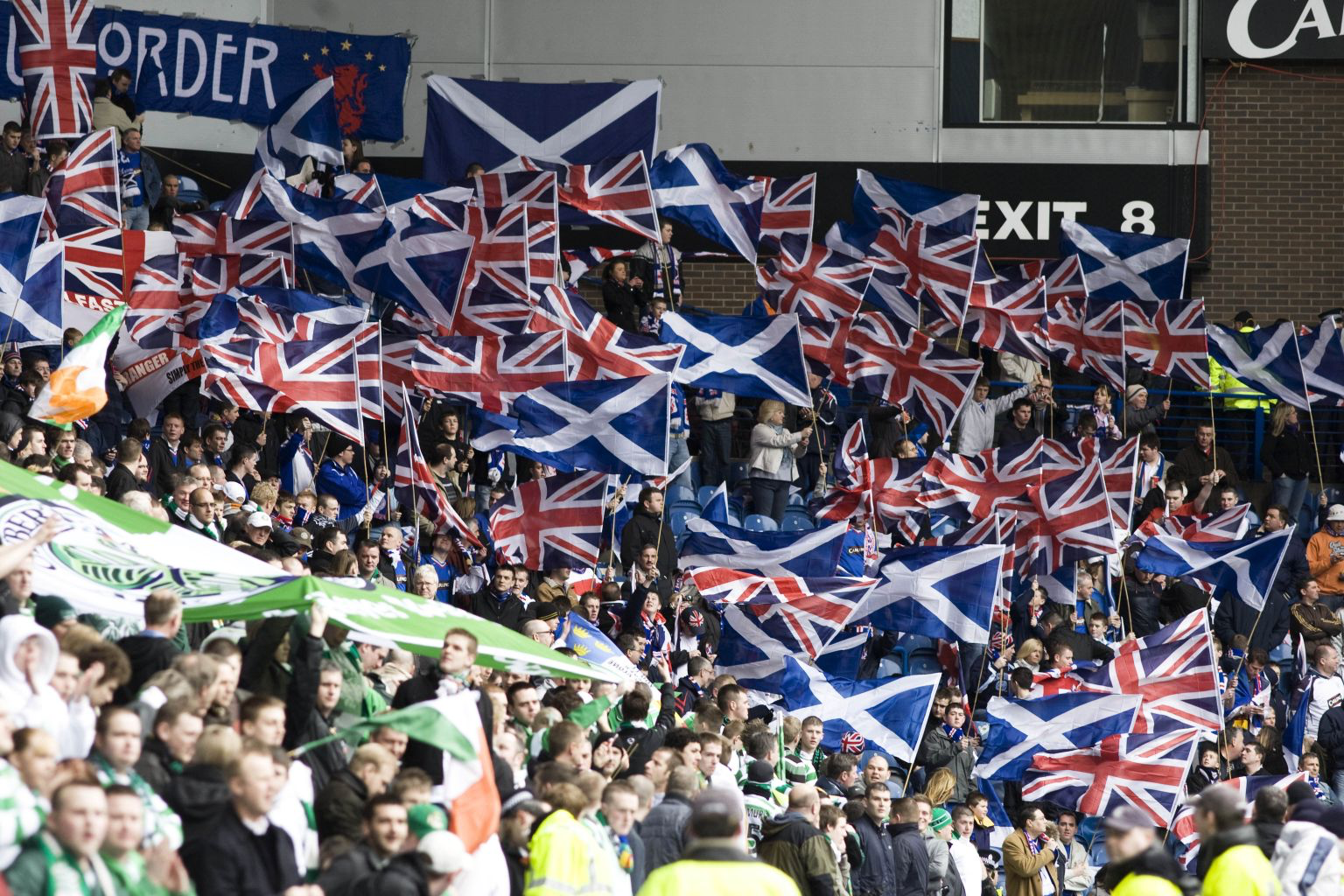
Rangers FC are a Glasgow-based football club with a strong British nationalist and Protestant identity. Their rivalry with Glasgow’s historically Irish-Catholic Celtic FC has long been plagued by sectarian violence and hooliganism. At Ibrox (Rangers’ stadium), the display of Union Jacks, royal iconography, and singing songs such as “Rule Britannia” (written in 1740) which glorifies Britain’s imperial past, and the contentious “Billy Boys”1 (from the 1920s), reflect the centrality of British nationalism and Protestantism to Rangers’ identity. The historical longevity of these songs further reinforce a sense of cultural continuity, thus emphasising nationalism’s claim to historic universality.
Recently, Rangers became embroiled in controversy during a Europa League match against the Turkish side Fenerbahce on March 13th. Rangers Ultras group, the Union Bears, unveiled a large banner stating: “Keep woke foreign ideologies out – defend Europe.” UEFA, European football’s governing body, has since charged the club for displaying a ‘racist and/or discriminatory banner’ (Rangers, 2025) according to a statement on Rangers’ own website.
This banner is troubling for several reasons: While ‘woke’ originally signified awareness of social injustice – particularly in Black liberation movements (Forbes, 2023) – it has been co-opted by right-wing groups to denounce anything deemed too ‘liberal’. ‘Foreign ideologies’ implies infiltration of non-native-european values, invoking a right-wing nationalist rhetoric that progressive movements are attacking traditional cultural values and taking over Europe. ‘Defend Europe’ implies that Europe is under siege, reinforcing the ‘culture war’ narrative purported by many far-right nationalist movements. Cultural and biological extinction is asserted in Renaud Camus’ conspiracy theory ‘the Great Replacement’, which argues white-European populations are being systematically replaced by non-white populations, especially from Muslim-majority countries (Rose, 2022).
The alt-right’s nationalist discourse frames resistance to ‘woke’ ideologies as necessary, viewing cultural liberalism as a hegemonic force that has ‘upended biologically produced cultural norms crucial for survival’ (Michelsen and De Orellana 2019: 280). Race is seen as the biological foundation of identity and cultural norms, with whiteness framed as needing protection from extinction through cultural and biological miscegenation. Drawing on Giulio Evola’s biological-cultural-ethical axiom, ‘race determines identity categories, which in turn determine cultural, social and ethical norms and attributes’ (Michelsen and De Orellana 2019: 277). This perspective positions races as competing in a Darwinian struggle for survival, casting cultural liberalism’s rise as a direct threat to its racial and cultural foundations (Michelsen and De Orellana, 2019). Concepts like ‘white resilience’ emerge as a defense against perceived moral manipulation, excessive altruism, and historical revisionism (Michelsen and De Orellana, 2019). Thus, alt-right discourse presents resilience to liberalism (i.e. ‘woke’ ideology) as essential for racial and cultural survival.
Four days after the controversy, Rangers hosted an open Iftar at Ibrox, welcoming around 250 guests to break their fast during Ramadan (Rangers Football Club, 2025). Framed as a proud gesture of inclusion, the event drew backlash from some fans. The second top comment on Rangers’ Iftar post on X read: ‘We are a Protestant Club for Protestant people from a Christian Country… Protestants don’t do DEI’(Hunter Crawford III, 2025).
This tension reveals a deeper contradiction. Rangers FC’s identity is not ‘just’ culturally specific, it is nationalist, defined by an ethos of Protestant Britishness. Nationalism constructs belonging around exclusion, and for some fans, Rangers’ religious and cultural traditions are therefore incompatible with diversity. As another fan commented, Rangers ‘are a Protestant, Northern European, British, Scottish football club… Ibrox is our church. Please keep your worship to your own temples’ (Wolfy, 2025).
Following the UEFA charge, Rangers stated it is a ‘modern, progressive football club proud of its diversity’, and being charged with ‘such a matter’ is shameful (Rangers, 2025). And, if you do not believe ‘absolutely everyone is welcome to follow Rangers… then Rangers is not the club for you, and you should disassociate yourself with the club immediately’ (Rangers, 2025). Yet if Rangers’ identity cannot, even theoretically, coexist with Islam, Catholicism, or other nationalities, then its universalist claim becomes difficult to reconcile. A deeper tension appears between the club’s aspirational image and the exclusionary logic embedded in its nationalist identity, which raises the question of who ‘everyone’ truly includes.
Endnotes:
- Lyrics include ‘We’re up to our knees in Fenian blood, surrender or you die.’ Today, ‘Fenian’ is commonly accepted as a slur for Catholics in Scotland.
Bibliography:
Allen, G. (2024) ‘Gov. Ron DeSantis’ war on ‘woke’ appears to be losing steam in Florida’, NP, 15 March. Available at: https://www.npr.org/2024/03/15/1238272873/desantis-woke-dont-say-gay-florida-stop-woke(Accessed 22 March 2025)
BBC (2019) ’Rangers: Uefa orders Ibrox section to close after ‘sectarian singing’, BBC, 23 August. Available at: https://www.bbc.co.uk/sport/football/49449628 (Accessed 21 March 2025)
BBC (2025) ‘Rangers embarrassed by ‘shameful’ banner after Uefa charges’, BBC, 19 March. Available at: https://www.bbc.co.uk/sport/football/articles/c89y399pl07o
(Accessed 22 March 2025)
Dowsett, H. (2024) ‘Rangers Ultras: A guide to the Union Bears, history, controversy’, Football Ground Guide, 10 December. Available at: https://footballgroundguide.com/news/rangers-ultras-snp-banners#:~:text=They%20are%20predominantly%20of%20a,for%20the%20Scottish%20Nationalist%20Party. (Accessed 22 March 2025)
Flint, J. and Kelly, J. (eds.) (2013) Bigotry, Football and Scotland: Perspectives and Debates. Edinburgh: Edinburgh University Press.
Michelsen, N. and De Orellana, P. (2019) ‘Discourses of resilience in the US alt-right’, Resilience, 7(3), pp. 271–287. doi: 10.1080/21693293.2019.1609199.
Murray, C. (2023) ‘What Does ‘Woke’ Even Mean? How A Decades-Old Racial Justice Term Became Co-Opted By Politics’, Forbes, 7 June. Available at: https://www.forbes.com/sites/conormurray/2023/06/06/what-does-woke-even-mean-how-a-decades-old-racial-justice-term-became-co-opted-by-politics/ (Accessed 19 March 2025).
PA Media (2019) ‘Rangers punished for sectarian chants with Ibrox part-closure’, The Guardian, 23 August. Available at: https://www.theguardian.com/football/2019/aug/23/rangers-legia-warsaw-sectarian-chants-seat-restriction (Accessed 21 March 2025)
Rangers Football Club (2025) [Twitter] 18 March. Available at: https://x.com/RangersFC/status/1902095161552707724 (Accessed 23 March 2025).
Rose, S. (2022) ‘A deadly ideology: how the ‘great replacement theory’ went mainstream’, The Guardian, 8 June. Available at: https://www.theguardian.com/world/2022/jun/08/a-deadly-ideology-how-the-great-replacement-theory-went-mainstream (Accessed 18 March 2025).
Sky Sports (2025) ‘Rangers punished with suspended stand closure for Ibrox banner as Celtic’s Brendan Rodgers also hit with UEFA sanction’, Sky Sports, 26 March. Available at: https://www.skysports.com/football/news/11095/13335663/rangers-punished-with-suspended-stand-closure-for-ibrox-banner-as-celtics-brendan-rodgers-also-hit-with-uefa-sanction (Accessed 26 March 2025).
Stevelynch (2008) Rangers vs. Celtic. Available at: https://www.flickr.com/photos/25150741@N05/2373447695/ (Accessed 27 March 2025).
 Identity Hunters