
By Jinchen Li
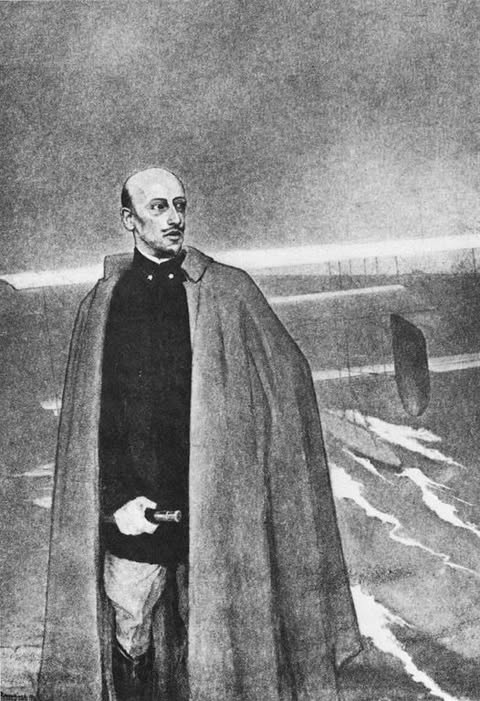
Nestled along the Adriatic coast of Croatia, the city of Rijeka—once called Fiume by Italians—appears at first glance to be a picturesque seaside town. However, Fiume was much more than that; it was a milestone experimental ground for modern nationalism and the dreamland of a poet. That poet was Gabriele D’Annunzio, a writer, nationalist, and autocrat who viewed politics as a form of performance art rather than a struggle for power—a grand spectacle akin to epic poetry. For the residents of Fiume in 1919, life felt like stepping into a collective dream. Their reality intertwined with the ambitions of this charismatic leader, creating a space that both constructed identities and challenged traditional notions of belonging. Fiume was not just a city; it was a stage. And the actors on this stage were dreamers, rebels, and those drawn by D’Annunzio’s compelling vision.
The Fire of Revolution
D’Annunzio’s Regency of Carnaro, established in 1919, unfolded in two distinct phases. The first was characterized by fervent nationalism. D’Annunzio envisioned Fiume as a springboard for unifying Italy under a revolutionary ideal—an Italy free from the control of the Savoy and belonging to its people, an “Italy for Italians”. For D’Annunzio, nationalism was inseparable from identity. He viewed the monarchy not only as a political structure but as a symbol of an aristocracy that protected wealth and privilege over people. His vision of an sought to unite citizens through shared culture and history, forging a collective national identity. His early experiments in Fiume reflected this idealistic fusion of nationalism and identity, aiming to redefine what it meant to be Italian.
From Struggle to Experimentation
When his efforts to overthrow Rome failed, D’Annunzio shifted focus. Fiume was no longer a mere steppingstone but the centerpiece of his revolutionary vision. Here, he launched a bold social and political experiment that blurred the lines between governance and performance. Fiume’s Uniquely small-scale demographic make up provided an ideal stage. Unlike leaders constrained by traditional institutions, in Fiume D’Annunzio faced no bureaucratic or interest-group limitations. His authority was supported by a force of 2,500 men, including former Italian Royal Army soldiers, nationalists, and World War I veterans. These individuals’ significance was not only as his power base but as residents In Fiume, ensuring his absolute authority in the tightly-knit community.
This lack of accountability allowed him to implement audacious plans: public spectacles, mass athletic competitions, impassioned speeches, and even elaborate rituals. Such events acted not only as governing tools but as public displays designed to fuse the identity of Citizen and Regime. His adoption of Corporatism, contrasting the corruption of Giolitti’s Italian government, promoted revival through a collective Nationalist Identity’.
The Shaping of Identity
D’Annunzio’s leadership was centred upon the governance and shaping of identity. What he loved, the people were taught to love; what he despised, they were encouraged to reject. His leadership emphasized the merging of personal will with collective aspirations, seamlessly aligning the leader’s desires with the people’s. On the stage of Fiume, nationalism transformed into performance art, rebellion into celebration, and politics into spectacle. Under this fervor, the people’s identity was molded by the charismatic leader, who shaped them into the romanticized roles of operatic and epic grandeur.
A City Like No Other
Under D’Annunzio’s rule, Fiume became an unparalleled experiment. His governing style, combined with the city’s unique context, made this experiment nearly impossible to replicate elsewhere. No other city so closely integrated absolute authority with a peculiar community; no other leader so effectively transformed politics into art and nationalism into collective revelry. To a bystander, D’Annunzio’s rule was perplexing and inspiring. His governance in Fiume remains a remarkable example of the intersection of politics, art, and identity—a grand performance that defined a fleeting era.
The Legacy of the Dream
Fiume was a momentary chapter in history, a utopia that evolved from a revolutionary springboard into a radical social experiment. D’Annunzio’s leadership demonstrated the power of charisma, creativity, and boldness to shape a community and reconstruct identity. His dream of merging personal will with collective identity remains both an inspiration and a cautionary tale. Ultimately, Fiume was a dream that could not last. But even in its transience, it left an indelible mark—a testament to humanity’s ability to reinvent itself and a leader’s capacity to turn a city into his canvas.
Though D’Annunzio may not fit the strict definition of a fascist, he undoubtedly embodied the concept of “Fasces”—the concept of supreme leadership. For better or worse, his vision of Fiume remains a thought-provoking chapter in the history of nationalism and identity.
 Identity Hunters