
By Julien McCallin
The word ‘sinister’, meaning something evil, means ‘on the left side’ in Latin (7). Meanwhile, its opposite ‘dexter’ (on the right side), gave the word dextrous, designating someone gifted with his hands. Even the word ‘ambidextrous’, referring to someone with similar ease in both his hands, means ‘having 2 right hands’ (7). This vision of left and right is etched into societies all the way up to language and etymology, consistently depicting the general right with positivity and the left negatively.
Currently around 11% of the world’s population is left-handed, with similar proportions when inside communities (8). This makes left-handed people a minority everywhere (3) of every community, and by looking at history, we see a long pattern of discrimination against left-handed people.
Across many societies we see open hostility towards left-handed people, as if the hand with which they wrote determined everything about them. This is akin to the way people of different races, languages or cultural practices are treated within societies. In fact, the oppression of left-handed people was a common trend across most societies.
In the Bible, Eve was birthed from Adam’s left side, and she is the one who ate the fruit of temptation (3). This created 2 things: general misogyny and mistrust towards the left in general, and an inherent association between the right, strong and masculine, and the left, vulnerable, inferior and feminine (10).
During the Inquisition, left handedness was enough to deem a woman a witch, and was enough to justify divorce in Japan (8).! In Ancient Rome, wedding rings were worn on your left hand to ward away its evil (8). Ancient Egypt depicted their enemies with their weapons in their left hand (8). The Celts are some of the rare societies who appreciated the left, worshipping it for its apparent relation to motherhood, still showing the left’s association with femininity (7).
From major things like castles stairs being built to facilitate defence, to everyday objects like scissors being frustratingly unusable most times for lefties, society is built for right-handed people (5). Until toilet paper became commonplace, people used their non-dominant hand, for the majority their left hand, for unhygienic tasks (5). This further embedded the idea that the left hand was dirty, and so were left-handed people.
We also see this in children’s cartoons and comics. When questioning their morality, a devil and an angel will often appear on a character’s shoulder, with the devil always being on the left (where he belongs according to the Bible), his weapon in his left hand. Similarly, the famous Batman villain Two Face’s burnt evil side is his left side. This shows how even children’s entertainment subliminally introduces ideas that the left is malevolent and corrupting.
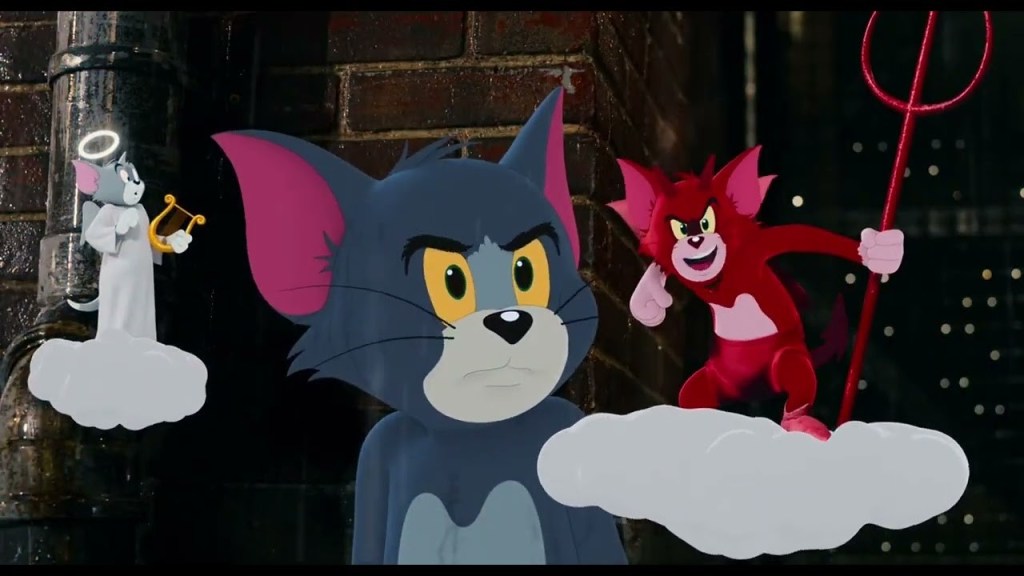
Figure 1. Tom from the Tom&Jerry cartoon and his shoulder angels (1)
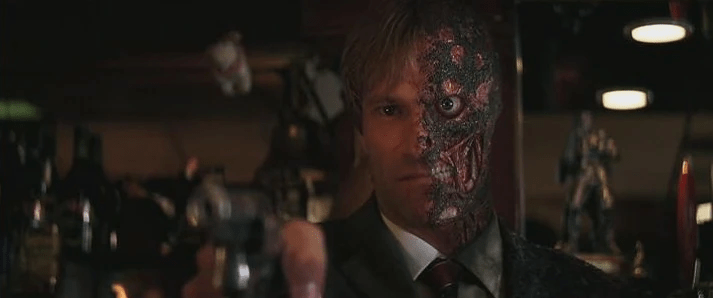
Figure 2. Two Face, from ‘The Dark Knight’ (2)
There is also the curious case of sports. Often, the best players in their discipline are left-handed or left footed (5). Examples include Rafael Nadal (tennis), Lionel Messi (football), Babe Ruth (baseball), and Wayne Gretzky (ice hockey). The case is particularly seen in fighting sports (boxing, MMA), where southpaws (a nickname for left-handed people) have always faced right-handed opponents and have adapted to them, whereas the opposite is rare. It’s interesting that in the most violent sports, left-handedness gives you an advantage, in a way confirming the danger of southpaws towards the general public as more adept fighters.
The important aspect of this identity is that it tends to be imposed onto others, not chosen. Something as mundane as your dominant hand is not something that defines the identity of a person or of a group of people, much like someone’s sexual orientation. Yet it is people outside of this group that view this basic human characteristic as a danger to the natural order (10). It is also for these reasons that the number of recorded left-handed people in societies has increased in the past century in the same way that the number of LGBTQ+ individuals have (without comparing their suffering): they were always in society, they just felt safe enough to not hide themselves anymore (1).
Whilst today we still have cases of left handedness being repressed as recently as 2015 (4), handedness is not considered a topic of discrimination anymore. However, this analysis shows us that human characteristics that do not stick to achosen structure can be used to define an Other.
Bibliography:
- Clark, Brianna, ‘Left-handedness and the cycle of acceptance’, Medium, (2024), https://brilovely.medium.com/left-handedness-and-the-cycle-of-acceptance-3e8d0386f0ef
- Crumpley, Michael, ‘RANKED: The 25 Greatest Left-Handed Athletes in History’, New Arena, (2024), https://newarena.com/sports/ranked-the-25-greatest-left-handed-athletes-in-history/
- Dictionary, ‘What’s So “Sinister” About The Left Hand?’, (2021), https://www.dictionary.com/e/sinister-dexter-left-right-word-origin-history/
- Kfor, ‘Oklahoma pre-k teacher accused in left-handed controversy resigns’, (2015), https://kfor.com/news/oklahoma-pre-k-teacher-accused-in-left-handed-controversy-resigns/
- Knowledge Raiders, ‘Left-Handed People Shouldn’t Exist’, Youtube, (2023), https://www.youtube.com/watch?v=3LsF45KXs04
- McManus, Chris, ‘Half a century of handedness research: Myths, truths; fictions, facts; backwards, but mostly forwards’, Brain and Neuroscience Advances, 3, 1-10, (2019)
- Merriam-Webster, ‘The Left-Hand of (Supposed) Darkness, https://www.merriam-webster.com/wordplay/sinister-left-dexter-right-history
- Milenković, Sanja; Belojević, Goran; Paunović, Katarina; Davidović, Dragana, ‘Historical aspects of left-handedness’, (Belgrade, 2019)
- Richardson, Thomas; Gilman, Tucker, ‘Left-handedness is associated with greater fighting success in humans’, Scientific Reports, 9, (2019) https://www.nature.com/articles/s41598-019-51975-3
- That Theology Teacher, ‘Why the Bible is Against Left-Handedness’, Youtube, (2019), https://www.youtube.com/watch?v=kItPADr-LqI
Photographic Sources:
- Four-Calendar Café, ‘Who is that Angel on your shoulder?’, (2024)
- Two-Face (The Dark Knight Trilogy), Batman Wiki
 Identity Hunters