
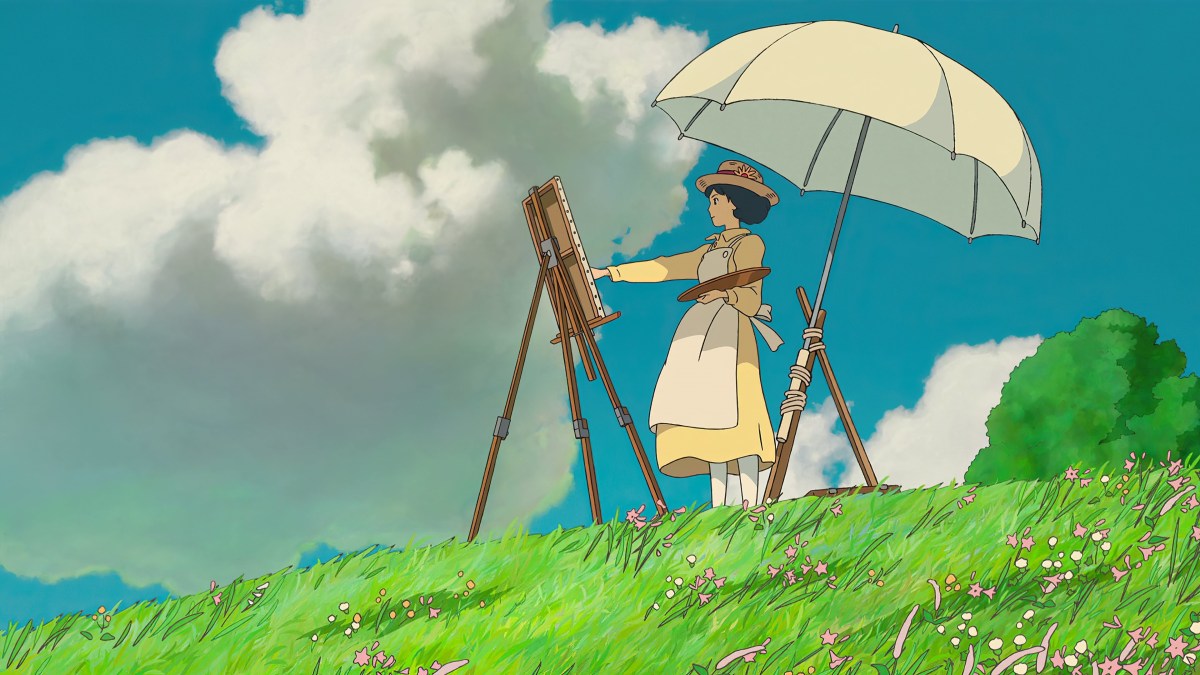
Hayao Miyazaki’s The Wind Rises, is the life story of Jiro Horikoshi, the famed designer of Mitsubishi’s “Zero” fighter plane. Jiro is a man born into poverty whose passion for aviation and natural intelligence push him into higher education and eventually a career as a brilliant aviation engineer. Along the way, Miyazaki tells the story of a similarly fledgeling Japan—whose lack of advanced technology and infrastructure prevent it from succeeding against foreign threats like Germany and China. (1) However, The Wind Rises exhibits a concerning lack of recognition for the immense destructiveness of Jiro’s efforts. Instead of a war profiteer, Jiro is displayed as boyishly single-minded and innocent. (2, 3) The Wind Rises is shockingly ill-informed, but it is not alone—as critic Inkoo Kang puts it, “The Wind Rises perpetuates Japanese society’s deliberate misremembering and rewriting of history, which cast the former Empire of the Rising Sun as a victim of World War II, while glossing over…the mass death and suffering its military perpetrated.” (2)
Forgetfulness was a strong trend of Japanese identity since the end of the Imperial Period. The Japanese experience of WWII was traumatic, and as such could be discursively branded as taboo, enabling selective a forgetfulness assisted by the novelty of American consumer culture and the US-sponsored cover-up of Japanese elite wrongdoing. (4) Instead, memory and representation of the Showa Period emphasised the experience of suffering and the perseverance of the Japanese people, shifting focus from Japan’s concurrent wrongdoing. (5) In the 1970’s and 80’s, cabinet ministers developed the custom of attending public ceremonies at shrines to the dead, formalising mourning as an act of patriotism. (4)
Japanese identity found new footing in the post-war era, using economic and social prosperity as well as Japan’s position as bastion of Asian democracy as sources of pride and self. (6) With regards to shared history, a new narrative emerged for this identity: victimisation. A post-war marked by American occupation, the brutality of Hiroshima and Nagasaki, and the fetishisation of experience for those that suffered lent itself to the identity of Japan as a victim of geopolitical events, not its perpetrator. (6) This narrative justified Japan’s existence as the victim of injustice, resolving the guilt of war. (6) The emphasis on experience mixed with the victimisation narrative also created a distinct sense of authenticity for the in-group and inauthenticity for the out-group, in keeping with Japan’s long-standing isolationist wariness of sakoku ishiki. (4)
However, in the 1990’s, policy and economic failures like the 1991 Recession and failure to react to the Hanshin Earthquake shattered the materialistic foundations of Japanese pride, while the Aum Shinrikyo subway attacks, rising suicide rates, and violence in schools created a sense of domestic crisis. (6) Furthermore, the end of the Cold War removed Japan’s democratic bulwark identity, and the rising power of other Asian nations like China and Korea
fomented this insecurity into existential dread. (1) At the 40th anniversary of WWII’s end, Japan looked to the past for an explanation of the crisis’ cause and a way forward.(6)
In response, Japanese nationalists used the pre-existent aspects of Japan’s memory towards revisionism to instil a national pride and solve the issues of the 1990’s by presenting history as a success story through “healthy nationalism”, or ken zenna nashonaruizumu. (7) Nationalists saw historical education as a crucial means to advance the country, just as their predecessors had in the Meiji period. (6) In the endeavour of reestablishing pride in self, the truth of Japan’s brutality was irreconcilable, thus it was ignored through Japan’s aforementioned cognitive structures of forgetfulness. (6) Instead, victimisation and experience narratives became imbued with nationalist anger, resentment, and pride. (4) As nations like China and Korea called for recognition of their grievances, they were seen as violating Japan’s sacred mourning culture and desire for self-acceptance.(4, 11) The historical disagreement served as the channel for xenophobic vitriol and replacement fears, supplemented by the perceived inauthenticity of out-group narratives and insecurity of Japan’s dominance. (4,8,9) As such, history became a political flashpoint, with grassroots movements, Diet members, and political commentators supporting a new “true” version of Japanese history. (10)
Despite Miyazaki’s anti-imperialist stance—for which nationalists have branded him a national traitor—The Wind Rises is emblematic of Japan’s nationalist revision. (7) Instead of grappling with the costs of war, it focuses on the struggle of its protagonists through disaster, disease, and international sanctions, completely casting aside the suffering of their victims and reflecting a society all-too ready to do the same.
References
1. Byford, Sam. “‘The Wind Rises’: The Beauty and Controversy of Miyazaki’s Final Film.” The Verge, (Jan. 2014)
2. Gerow, Aaron. “Consuming Asia, Consuming Japan: The New Neonationalist Revisionism in Japan.” In Censoring history, Routledge, (2016): pp. 74-95.
3. He, Yinan. “Remembering and Forgetting the War: Elite Mythmaking, Mass Reaction, and Sino-Japanese Relations, 1950–2006.” History & Memory 19, no. 2 (2007): 43-74.
4. Yoda, Tomiko, and Harry D Harootunian. “Japan after Japan: social and cultural life from the recessionary 1990s to the present”, London: Duke University Press, (2006): 98-105
5. Kang, Inkoo. “The Trouble with the Wind Rises – The Village Voice.” ScreenAnarchy, (11 Dec. 2013)
6. McCormack, Gavan. “Nationalism and identity in post-Cold War Japan.” Pacifica Review: Peace, security & global change 12, no. 3 (2000): 247-263.
7. Richter, Steffi. “Historical revisionism in contemporary Japan.” Contested views of a common past: Revisions of history in contemporary East Asia (2008): 47-72.
8. Saaler, Sven. “Nationalism and history in contemporary Japan.” In Asian Nationalisms Reconsidered, Routledge, (2015): 188-201.
9. Saaler, Sven. “Nationalism, History, and Collective Narcissism: Historical Revisionism in Twenty-First-Century Japan.” In The Routledge Handbook of Nationalism in East and Southeast Asia (2023): 234-249
10. Suzuki, Shogo. “Japanese Revisionists and the ‘Korea Threat’: Insights from Ontological Security.” In Ontological Insecurities and the Politics of Contemporary Populism, Routledge (2023): 90-108.
11. Webb, Charles. “Atrocity, Art, and Miyazaki’s The Wind Rises.” ScreenAnarchy, (10 Dec. 2013)
 Identity Hunters