
By Benjamin Ruz Vega
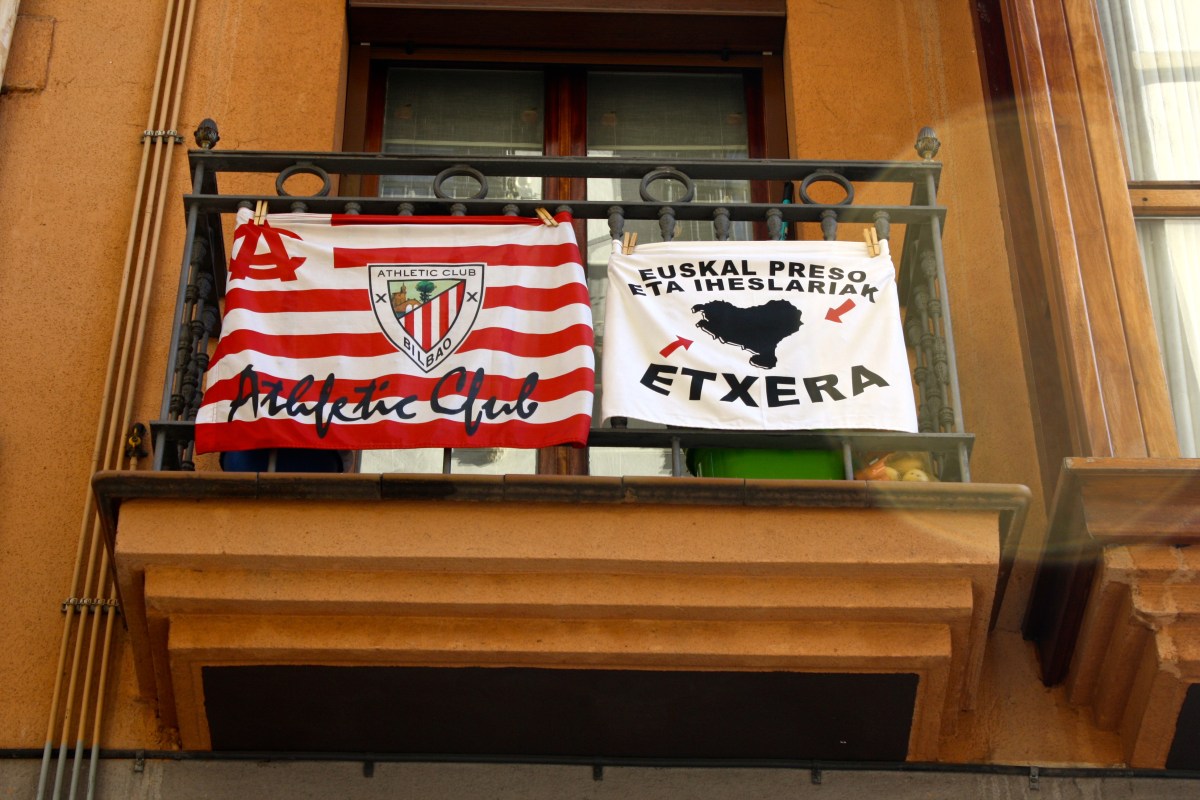
Basque national identity was subjected to an important struggle for survival during the 20th Century. The dictatorships of Primo de Rivera and Francisco Franco diminished the political autonomy of the Basque country and oppressed them constantly through laws and edicts that targeted their political individuality and desire for independence (Macko, 2011, p. 12 & Payne, 1991. p. 489). This article aims to analyze the history of one sports institution that has served as a symbol of Basque national identity through its struggle and history: Bilbao’s Athletic Club.
Basque Nationalism and Club Values
One of the most relevant aspects of the club has been its strong adherence to Basque Identity, reflected in their club values and policies. For example, Athletic Club only hires players formed either by the Club’s inferior divisions from an early age or in the inferior divisions of other clubs from the Basque Country (Athletic Club, n.d.). Furthermore, the club’s official crest since the early 20th Century has presented iconic symbols of the Basque Nation such as the Tree of Gernika, one of the most important symbols for Basque Nationalism (Athletic Club, 2021). Moreover, the club has been a platform for several pro-Basque demonstrations, such as club captain José Ángel Iribar’s on-field display of the Basque Country’s flag in 1976, only one year after Franco’s death (Gutierrez-Chico, 2017, p. 106). Therefore, these policies and actions reflect the importance of Athletic club as a conduit for the expression of Basque nationalism.
Athletic Club during Franco’s regime
Franco’s regime attempted to separate the club from its Basque components and reframe its existing narratives in order to integrate it into the vision of a single united Spain. This period saw the club being used as a platform for the promotion of a Francoist regional nationalism, intending to integrate Basqueness to a national Spanish identity while condemning the actions of its best players in promoting the “dead since birth” Euskadi Republic (Quiroga, 2019. p. 282). Furthermore, the regime tried to reframe the club’s Basque-only player policy as an anti-foreigner, Spanish only, proudly nationalist player policy (ibid. p. 287). Despite these efforts, the club retained its original values and during the later years of Franco’s regime became a platform of anti-Francoist Basque Nationalism. This process was slow and difficult due to the presence of falangist members within the club’s directory, but players such as Angel Iribar, as well as club fans exhibiting Basque symbols and even playing traditional Basque instruments in the stadium as a sign of open defiance helped to consolidate the club once again as a Basque institution (ibid. p. 293). Therefore, the
club experienced a struggle for the preservation of its values based on a Basque national identity during a period when Franco’s regime heavily attempted to transform it into a platform for the promotion of an anti-Basque nationalist agenda, ultimately transforming into a symbol of resistance and dissent against these efforts.
Athletic Club as a symbol of Basque national identity
Its history and values have established the club as symbolic institution of Basque nationalism. Accordingly, supporting Athletic Club has historically been perceived as characteristic feature of being Basque, or having Basque ascendency (Gutierrez-Chico, 2017, p. 102). Furthermore, as Mariel Aquino points out, the club, as well as its players, act as a de facto national team that actively construct and perform Basqueness whenever they play (Aquino, 2017, p.127). The fans also share this vision of the team as a representative of the Basque country and prefer their success over the Spanish National Team’s one, and even over the one of other smaller, regional clubs, celebrating their success in national and international competitions as a success for the Basque country (Gutierrez-Chico, 2017, p.124). Accordingly, Basque identity and Athletic Club share a symbiotic relation in which the later acts as a manifestation of the former in the world of football, fulfilling a symbolical role in its promotion and preservation.
In conclusion, the role of Athletic Club in the representation of Basque National identity makes it a fundamental element of this identity, acting within the realm of football as representatives of a Basque nation that takes great pride in the club’s nationalist philosophy and values.
 Identity Hunters