
By Baptise De Vries
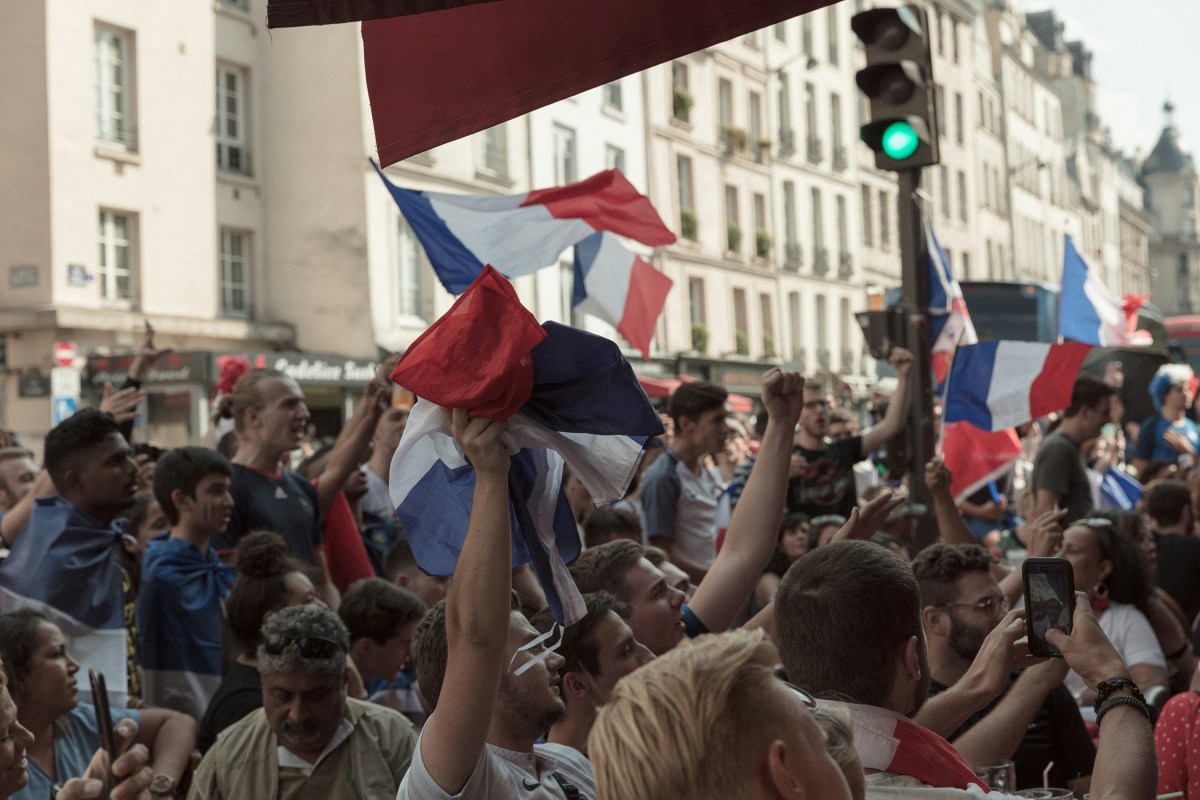
Zinedine Zidane was undoubtedly the most popular man in France in July 1998. The French born player of Algerian descent or “Zizou” might still be the most worshiped man in the Hexagon to this day. What he and the French football team achieved was seen both as a sporting and socio-political revolution. Their victory was praised for ‘symbolizing and furthering the reconciliation of France with its colonial past’ (Christopher S. Thompson, 2015). For some, this Black-Blanc-Beur (Black, White, Arab) generation proved that integration à la française was possible. Jacques Chirac, president at the time, praised the both ‘tricolour and multicolour team’ (Schneider, 1998). For others this meant representation. Representation of second-generation immigrants in a country where race and religion are suppressed by la République and Laïcité. More than 25 years later, the Black Blanc Beur phenomenon is still a major subject within social and political conversations, but how exactly is it remembered in today’s France?
A brief interlude of national peace regarding identity
Many French born immigrants from the Maghreb region look fondly upon this period with a sense of pride and belonging. As Melha Bedia remarked ‘Zidane scored two headers, and we weren’t Arabs anymore’ (TMC, 2024). More than the diminished stigmatisation that this quote suggests, it outlines the need of justification faced by immigrants. The latter is a consequence of the high expectations of the French government regarding the adoption of French norms and culture by newcomers dating back to the 19th century. Building on this 19th century style thought of immigration, Jean-Marie Le Pen went further, directly attacking the football team stating that the players couldn’t represent France with dignity considering their colour and origins (Yvan Gastaut, 2021). The belief that the Victory of 1998 ended, for a brief period, this social pressure is widespread in the general opinion. Being an Arab was not a problem anymore and a sense of new beginning regarding immigration and integration was felt. In fact, more than a beginning, the Black Blanc Beur was a response to nationalists.
Consequently, a part of the population are partisans of c’était mieux avant. In other words, second generation immigrants or even third and fourth generations who were not even born in 1998 remember the Black Blanc Beur phenomenon with nostalgia as things seemed to be better then. Furthermore, this belief that Zidane and the Black Bland Beur generation was the pinnacle of French multiculturalism is anchored in common memory because it is seen as the end of an identity struggle. Indeed, many antiracist movements and charities actively campaigned against police brutality and racial discrimination. The most famous is probably the “Marche des beurs” (march of the Arabs), a mediatised march from Marseille to Paris following the death of young French born Arabs. In sum, the world cup victory was seen as the end of this struggle, where français de souche or issue de l’immigration got together to celebrate their “Frenchness”. People thus remember the Black Blanc Beur phenomenon with both nostalgia and pride. However, there is not a consensus on the matter.
Hypocrisy and the return to reality.
Indeed, if some remember this phenomenon as an emulation of multiculturalism and pinnacle of integration. The Black Blanc Beur phenomenon can also be seen as the embodiment of hypocrisy of French politicians and nationalists. The Black Blanc beur motto itself was made by ‘white journalists, and forced onto
the scene’ (Jeremy Ullmann, 2020). Additionally, Zidane’s identity and success was used by politicians to justify the French model of integration. The victory of 1998 was seen as a formidable instrument to further integrate young generations of French citizens born out of immigration. The hypocrisy of the motto and movement was dismantled by domestic and international politics namely 9/11, and Franco-Algerian relations. Following 9/11, stigmatisation of Arabs and especially Muslims stalled the political and social changes that emanated from the World Cup. Speaking of football, the fiasco of the France-Algeria match of 2001 marked the disappearance of the Black Blanc Beur euphoria (Nathalie Etoke, 2009). The game further legitimised the nationalist point on the “inability” of immigrants, especially Algerians, to integrate fully and the social fracture it represents. Politically, the growth of the Far right, especially Jean-Marie Le Pen’s appearance in the second round of the presidential election sealed the end of the short-lived myth. Furthermore, the election of Nicolas Sarkozy, his stance on the Franco-Algerian relation and France’s relation with its colonial past sealed the end of the Black Blanc Beur honeymoon. Zinedine Zidane himself was caught by the hypocrisy, praised and glorified as a symbol when scoring two headers in a world cup final he faced backlash from the political class when headbutting an Italian player in the 2006 final.
Conclusion
To conclude, the remembrance of the Black Blanc Beur generation is divided into two main views. The nostalgic approach was mainly adopted by contemporary of the movement and white political elites. In opposition, younger generations highlight the hypocrisy behind the motto and its impact. The debates about the French Football team still to this day encompass the broader debates of Intégration and has especially become a battleground for the Far right.
Bibliography:
· Etoke, N. (2009). Black Blanc Beur: Ma France à moi. Nouvelles Études Francophones, 24(1), 157–171. http://www.jstor.org/stable/25702193
· Gastaut, Y. (2021). ‘“Black Blanc Beur”: le corps des héros et la fin d’un myth’. The Conversation. https://theconversation.com/black-blanc-beur-le-corps-des-heros-et-la-fin-dun-mythe-157617
· Schneider, V. (1998). ‘Immigration: la droite sous l’effet du mondial. La victoire de la «France multicolore» réjouit de nombreux élus.’, Libération https://www.liberation.fr/france/1998/07/16/immigration-la-droite-sous-l-effet-du-mondial-la-victoire-de-la-france-multicolore-rejouit-de-nombre_241753/
· Thompson, C. S. (2015). From Black-Blanc-Beur to Black-Black-Black?: “L’Affaire des Quotas” and the Shattered “Image of 1998” in Twenty-First-Century France. French Politics, Culture & Society, 33(1), 101–121. https://www.jstor.org/stable/26378219
· Ullman, J. (2020) ‘Black Blanc Beur: how french secularism suppresses important conversations about race’, Media diversity institute. https://www.media-diversity.org/black-blanc-beur-how-french-secularism-suppresses-important-conversations-about-race/
 Identity Hunters