
By Alexander Sutherland
Open a piece of popular media on the Roman Empire, and one will find that most of this media will portray the Romans speaking English with a ‘British’ accent’. For instance, in HBO’s Rome, the Patrician Romans speak in Received Pronunciation, while Roman soldiers and ‘Plebian’ characters speak in more ‘lower’ class or ‘regional’ accents (Yorkshire, Cockney, etc). This is true in other media such as Gladiator, or Rome II: Total War., Romans as we know them did not speak within class distinctions. They were highly literate, and non-urban accents were not normatively positive or negative. [1] What is going on here is something more purposeful than simply replacing Latin with ‘British’ English, but rather the product of an elite identity developed by the British ‘Gentlemen’ class.
Like all European empires, Britain imitated Rome, [2] but this perennial claim served several functions. These included the legitimisation of an elite identity of ‘Gentlemen’ within wider British society and empire, and creation of a normative hierarchy that justified British authority and the imposed order. Through the continued use and expansion of the English language, the association between the British upper-class and the Roman Patricians has only become cemented in the popular imagination.
This appropriation of Roman identity into British identity is a form of historical ‘reconstitution’. [3] The British elite’s understanding of Rome has less to do with a ‘true’ understanding of the Roman Empire. Edward Gibbon’s infamous volumes on the Roman empire have more to do with Whiggish interpretations of the British empire’s place post-American Revolution than discussing the fall of the Roman Empire. The British came to understand their empire as it was developing before their eyes.
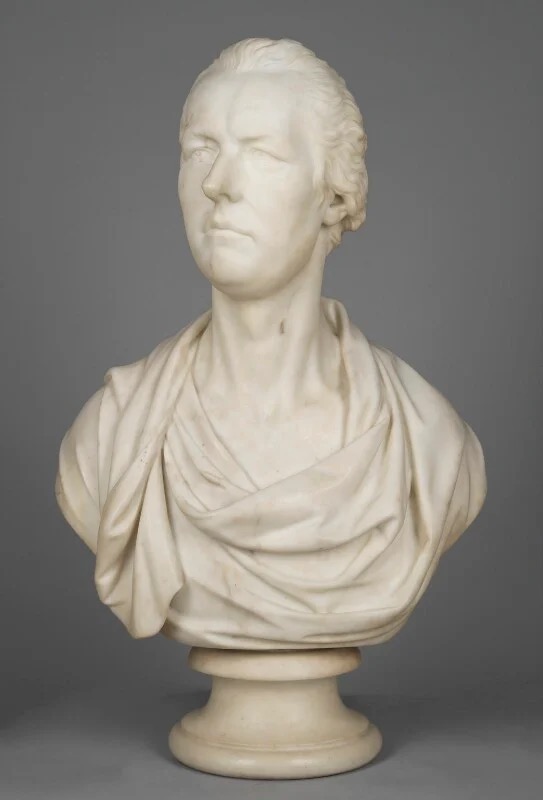
The British gentlemanly elite were inculcated in classical education and used the Romans to understand their own place in empire, history and society. [4] The creation of this identity emphasised a hierarchy, linked to the concept of ‘Gentility’. For the Roman concept of ‘Virtue’, the British elite appropriated a primordial concept for their notion of ‘gentility’. This concept was based on the importance of aristocratic birth in defining your behaviour and station in society. For the British elite, the appropriation of Rome and its cultural and political aesthetics served to legitimise their rule over society and the wider empire. [5] Contrastingly, Greece was used as a Whiggish/Liberal model that was truer, if not, a more legitimate ‘identity’ for Britain to appropriate. Rome was appealing to a landed, gentlemanly order. The imitation of Roman Patrician power and virtue is evident in the enormous volume of busts of British gentlemen carved in the style of Roman senators as they had seen on the Grand Tour through Europe.
With gentlemanly birth, came distinction and separation from ‘the unwashed masses’ and their ever-growing power within a democratising society. This was a natural part of the ‘progressive’ or ‘Whig’ interpretation of history that Victorians believed to underpin the movements of history. [6] Change was natural, but so was the ‘natural’ order. This was why in a rapidly changing society the British elite established a normative elite identity that distinguished those of ‘proper station’ from the rest, utilising
Rome’s imperial legacy as a legitimising argument. [7] To establish and exclude others from this identity, the British elite sought to distinguish themselves through manners, professions and, importantly, accents. [8] Received Pronunciation, as a form of middle-to-upper class accent, began to emerge in the Regency and early Victorian period, coinciding with a rise in population and the Great Reform Act of 1832. [9]
Fears of being overwhelmed by democratising and modern forces, it became a staple not only to inculcate new generations of the elite with classical education; but also to teach them how to speak in a ‘proper’ fashion, as those such as Cicero and Cato the Elder surely must have done. Elocution lessons were designed to teach young gentlemen how to distinguish himself from the masses and command attention with their voices, which continues to this day. Eton comes to mind immediately, but many other institutions, such as the Royal Navy, also gave elocution lessons to officers late into the 20th century. [10] Distinction, to both the lower orders and the imperial subjects, was legitimised through an appropriation of Rome’s imperial legacy for contemporary needs. This creation of hierarchy of the 19th century has filtered into popular depictions of the Romans and other civilisations of antiquity, in Shakespearean Plays that then into Cinema. [11] Regardless of the connections, the association continues through its presence in portrayal of Roman speech in media such as Gladiator or HBO’s Rome.
1 J.N. Adams, ‘Romanitas’ and the Latin Language’, The Classical Quarterly, 53 (2003), 191.
2 Andrew Lambert, Nelson: Britannia’s God of War (Faber and Faber, 2018), 328-329.
3 Paul Veyne, Writing History: essay on epistemology (Wesleyan University Press).
4 Peter J. Cain and Anthony G. Hopkins, British Imperialism: 1688-2025 (Routledge, 2015), 50-51.
5 Krishan Kumar, ‘Greece and Rome in the British Empire: Contrasting Role Models’, Journal of British Studies, 51 (2012), 95-96.
6 Duncan Bell, The Idea of Greater Britain: Empire and the Future of World Order, 1860-1900 (Princeton University Press, 2007), 208.
7 Ibid, 210-214.
8 Cain and Hopkins, 52-54, 77, 724.
9 Linda Colley, ‘Whose Nation? Class and National Consciousness In Britain, 1750-1830’, Past and Present, 113 (1986), 117.
10 Edward Hampshire, The Royal Navy in the Cold War Years: 1966-1990 (Seaforth, 2024), 29.
11 Charlton Heston Mark Antony speech “Julius Caesar” (1970) Accessed 5th January 2025.
Bibliography
Adams, J.N., ‘Romanitas’ and the Latin Language’, The Classical Quarterly, 53 (2003), 184-205.
Bell, Duncan, The Idea of Greater Britain: Empire and the Future of World Order, 1860-1900 (Princeton
University Press, 2007).
Cain, Peter J., and, Hopkins, Anthony G., British Imperialism: 1688-2025 (Routledge, 2015).
Cannadine, David, Ornamentalism: How the British Saw Their Empire (Oxford, 2002)
Colley, Linda, ‘Whose Nation? Class and National Consciousness In Britain, 1750-1830’, Past and
Present, 113 (1986), 97-117.
Hampshire, Edward, The Royal Navy in the Cold War Years: 1966-1990 (Seaforth, 2024).
Kumar, Krishan, ‘Greece and Rome in the British Empire: Contrasting Role Models’, Journal of British
Studies, 51 (2012), 76-101.
Lambert, Andrew, Nelson: Britannia’s God of War (Faber and Faber, 2005).Lambert, Andrew, Seapower States: Maritime Culture, Continental Empires, And the Conflict that Made
the Modern World (Yale, 2018).
Vayne, Paul, Writing History: essay on epistemology (Wesleyan University Press).
 Identity Hunters