
Written by guest writer Charles Khalaf
War ravages the Land ! Lebanon is surrounded by monsters destroying the pillars of what historiographer Kamal Salibi once called a house of many mansions. Some are trying to fight them, some are clapping, some are just expressing feelings of hate and agony. Only a small minority understands that they are caught between geopolitical bulldozers that are squeezing the house from every side. Decisions on the future of this conflict lie mainly in Tehran and Tel Aviv, and not to forget Washington, who always has a leverage. Yet the people of Lebanon have an essential role to play, maybe not on whether a cease fire will happen, but on whether Lebanon as an entity can continue to exist.
Within this turmoil, the many mansions that always constituted the main foundations of the house are separating from one another, building walls between each other, and further radicalising into their own sectarian roofs. Some Lebanese have decided to play games, one that has often been known to be played in the house during times of crisis. The identity struggle is back on top, and as long as the conflict continues, opinions will further radicalise, and internal dialogue will become no more than weighted words that hides sectarian existential discourses. The interactive mechanism of the internal and external dynamics of Lebanese politics are once more at play with high tensions, reminding us of a time where a similar scenario led to the first Lebanese war in 1975. Yet this time, the situation is different and civil conflict might not be the only way forward.
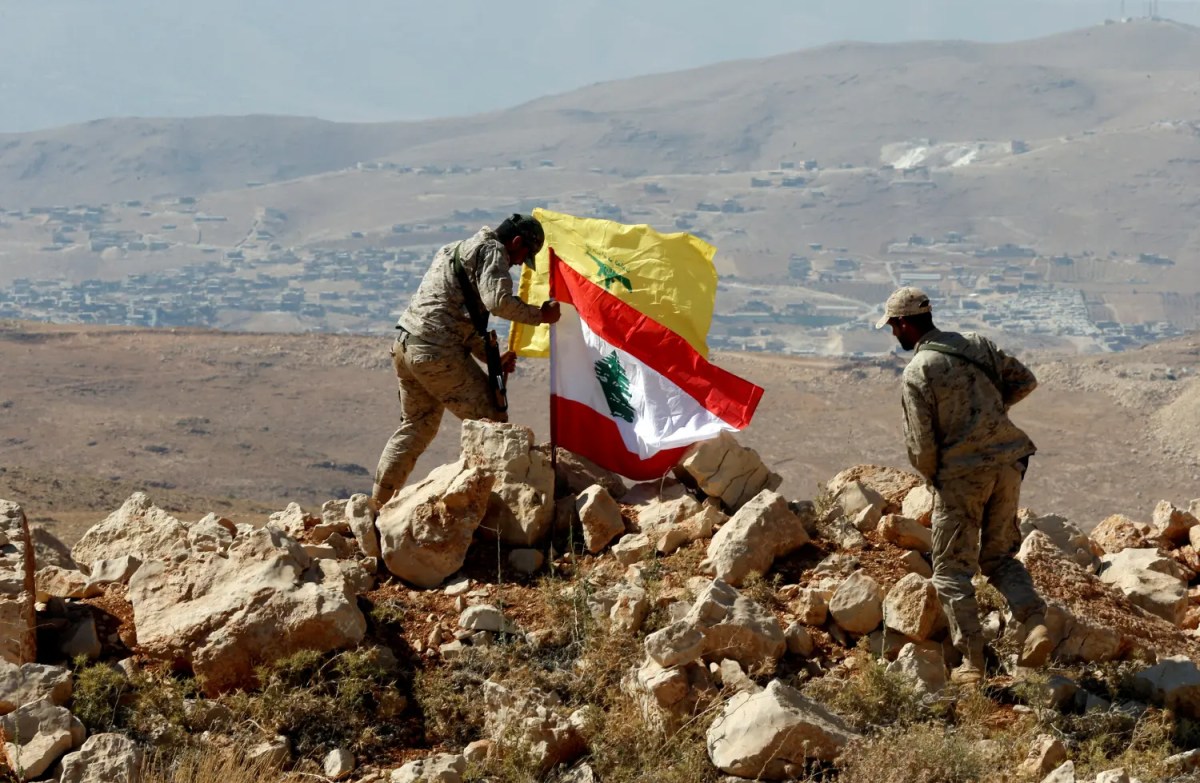
Aside from Hezbollah’s hardcore supporters that are mainly from the Shia community, two main opinion camps have been formed since the beginning of Israel’s operations against Hezbollah in Lebanon. On one side, Israel’s violent behaviour in south Lebanon, parts of the Beqaa and Beirut have merged many Lebanese who are not necessary supporters of Hezbollah’s into the party famous resistance discourse. They argue that the organizations armed wing is the only current way to fend off Israel’s aggression and defend the land from the historic invaders of southern Lebanon. Within the shy and useless presence of the weak Lebanese state, Hezbollah is being seen as filling an essential yet existential role for the sake of Lebanon’s territorial sovereignty, as well as the risks of it being turned into another Gaza.

On the other side, some are silently watching, and maybe even clapping to the course of the conflict. They see it as the only viable way to get rid of the sub state entity that has been terrorizing and crippling the Lebanese state for decades. The fact remains that it was Hezbollah who dragged the entire country on October the 8th into this conflict under the banner of the Iran’s axis uniting the fronts. The result has been catastrophic for everyone. They believe the more Israel is capable of weakening Hezbollah, the more the future is bright for the establishment of a real powerful state in Lebanon.
While addressing this side of current public opinion, one of the few remaining spokespersons of the party of God stated that Lebanon’s identity will always remain that of a resistance, “whether you like it or not” . The current war has exposed, more clearly than ever, that Hezbollah’s narrative of “resistance” serves primarily as a facade for its deeper role as an extension of Iranian geopolitical strategy in the Middle East. While Hezbollah has long presented itself as Lebanon’s defender against Israeli aggression, this conflict has revealed the limits of that claim. After all, south Lebanon could not be defended as they have been claiming for decades, let alone ‘exterminating’ the ‘Zionist entity’ from existence. Their actions are increasingly aligned with Iran’s broader regional ambitions rather than Lebanon’s national interests. Instead of truly protecting South Lebanon, Hezbollah’s military activities seem to be more about responding to the strategic needs of Tehran. Missile strikes on Israel have only increased whenever tensions grew between Tehran and Tel Aviv. Even the assassination of a god-like figure for Hezbollah like Hassan Nasrallah did not prompt a retaliation at the same level of the attack following Iran’s flying missile towards Israel. The sovereignty and role of the Lebanese state is openly undegraded by the Islamic republic, as stated by the head of the Iranian parliament in an interview with French Newspaper Le Figaro claiming that Iran is ready to negotiate with France on behalf of Lebanon. To what extent can we call this identity Lebanese, let alone national, when it somehow always turns back to the Persian womb of Wilayat Al Fakih. Has the Shia mansion just left the house, or did we just come to this realisation ? Hezbollah today is leaderless, with its entire military command annihilated, having no choice but to take direct orders from its Iranian godfather. The historic proxy/ally academic debate has finally come to an end.

When looking at the “sovereigntists” that are enjoying Hezbollah’s downfall on the other side, the fact remains that Israel’s war on Hezbollah is accounting an enormous price of Lebanon, whether in terms of human lives, refugee’s crises and economic handicap. How long would the House be able to withstand and survive Israel missiles, especially when the mansions under its roofs are constantly fragmentating while the war goes on? And even if the house collapses and we strive for a fresh start brick by brick, what are the chances of building something durable under one national roof ? The ideology that Hezbollah has been entrenching into its Shia community for 40 years will not disappear in the brink of an eye. Wishes for these scenarios to occur are but delusions that echoing a lost Christian dream of the early 80s. The reality today is that nearly half of the utopic 10452 they vowed to protect is being turned into rubbles.
The Shiite community today is in its worst ever situation. It is their people that are mainly displaced, sleeping on the streets of Beirut and looking for shelter in safer areas, sometimes having bitter welcomes. Within a week’s time, they found themselves in a deep shock realising that the ‘powerful’ resistance could not protect them and their villages, let alone offering them effective evacuation plans and shelters. All they could find was heart-warming solidarity from other Lebanese who offered their houses, schools, nightclubs… These are the same Lebanese that Hezbollah’s MP Mohammed Raad previously described as “Drunken society” standing in the way of a true “resistance society”. The State is absent as usual. No matter the fully justified animosity some feel towards Hezbollah and its recent legacy in Lebanon, now is not the time to settle scores let alone celebrating a war that is causing misery to a big portion of the Lebanese population. A nation’s greatness is measured in the way it treats its weakest members. If we are not willing to take into consideration their suffering, forgive past mistakes, and welcome them back to the house, we will never be able to live under the same roof, even in different mansions.
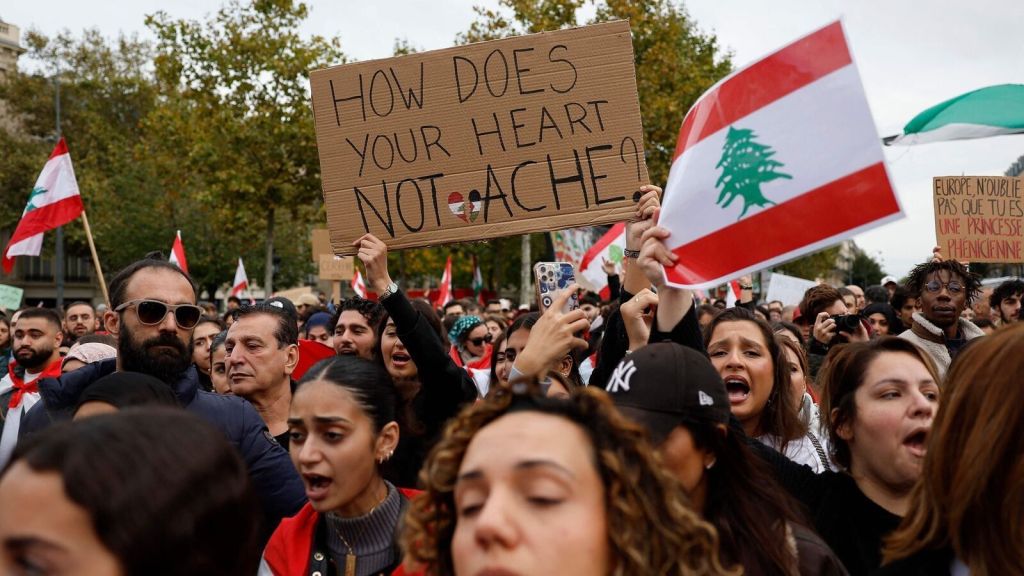
History has a tendency to rhyme, but when it comes to Lebanon, it always pens a haunting poem. This last war on Lebanon has allowed the historic identity game among the Lebanese to re-emerge from its shadows and divide the “nation” over its identity. Each of the different sectarian groups in Lebanon saw the nation through the lens of its own sectarian community. They formed a national identity according to their sectarian interests and fears, ones that usually confound with geopolitical interests. Whenever the external dynamics clash, the Lebanese find themselves playing the same game all over again. However, this time might be different. The first round is now closed, each mansion had the chance to dream of ‘their’ Lebanon, got to a relative peak in its realisation, but ended up paying a high price for it. Hassan Nasrallah this year joined Kamal Jumblatt, Bashir Gemayel, and Rafik el Hariri on the table of sectarian father figures that tried building their mansions on top of others having a very similar fate. The time has come to fotfeit a second round of games, and to learn the lessons that history is still rhyming for us. The Lebanese have to realise that the only way this house could survive and provide a peaceful and stable life for its inhabitants regardless of their mansions is through a strong unified state, one that is not toppled by sub-nations under its roof. Otherwise, the house of many mansions, as we’ve known it so far, can not cease to exist.
 Identity Hunters