
Written by Maxime C
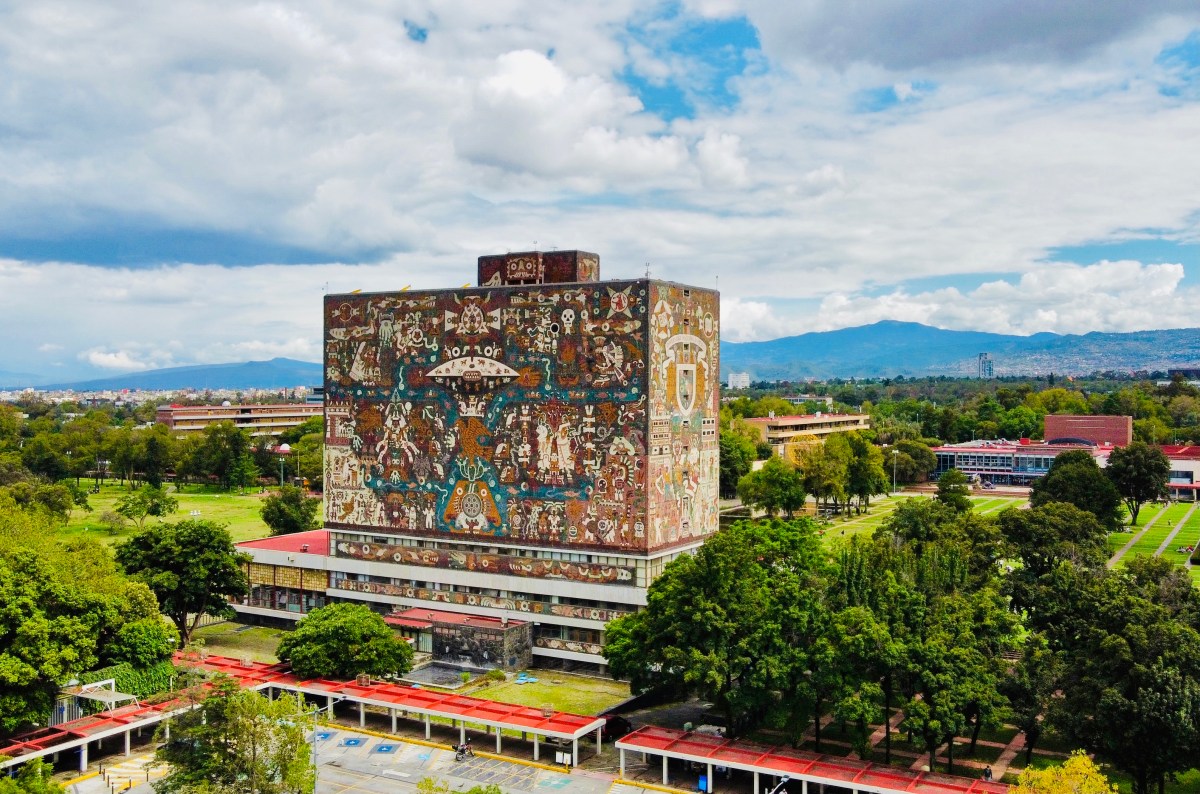
Figure 1. The Central Library of the National Autonomous University of Mexico. Certain architectural styles lend themselves better to embracing local vernaculars, as is the case here.
If you use Instagram or Twitter and are mildly interested in architecture, the algorithm might have fed you posts making a comparison between modern buildings and European traditional buildings. The discourse of these posts exclusively demonise modern and contemporary architecture, making approximative rapprochements between architectural styles, emitting dubious anthropological claims and often revealing a very superficial understanding of architecture theory. The channels emitting those posts all belong to a same tightly knit group of content creators patronised by Viktor Orban of Hungary, spearhead of European ethnocentric cultural revival. These accounts rely heavily on clickbait and on controversy to generate engagement to their content, so the conversations around these posts rarely elevate themselves above puerile manichaeisms. When that is not the case and a user points out the intellectual dishonesty of these posts, they are often met with the same unanimous condemnation of the subjectivity of beauty as voiced in a video published by creators of the same network titled What Makes Buildings Beautiful (And Why Beauty Does Matter)(1). This video illustrates perfectly the ideological mission of these accounts based on a shaky development of neoplatonist philosophy applied to justify the cultural normativity of the concept of beauty. This article will therefore base itself on a critical analysis of the content of this video in order to explain how the rhetoric and biases spread by these accounts play into the “culture wars” currently led by reactionary forces.
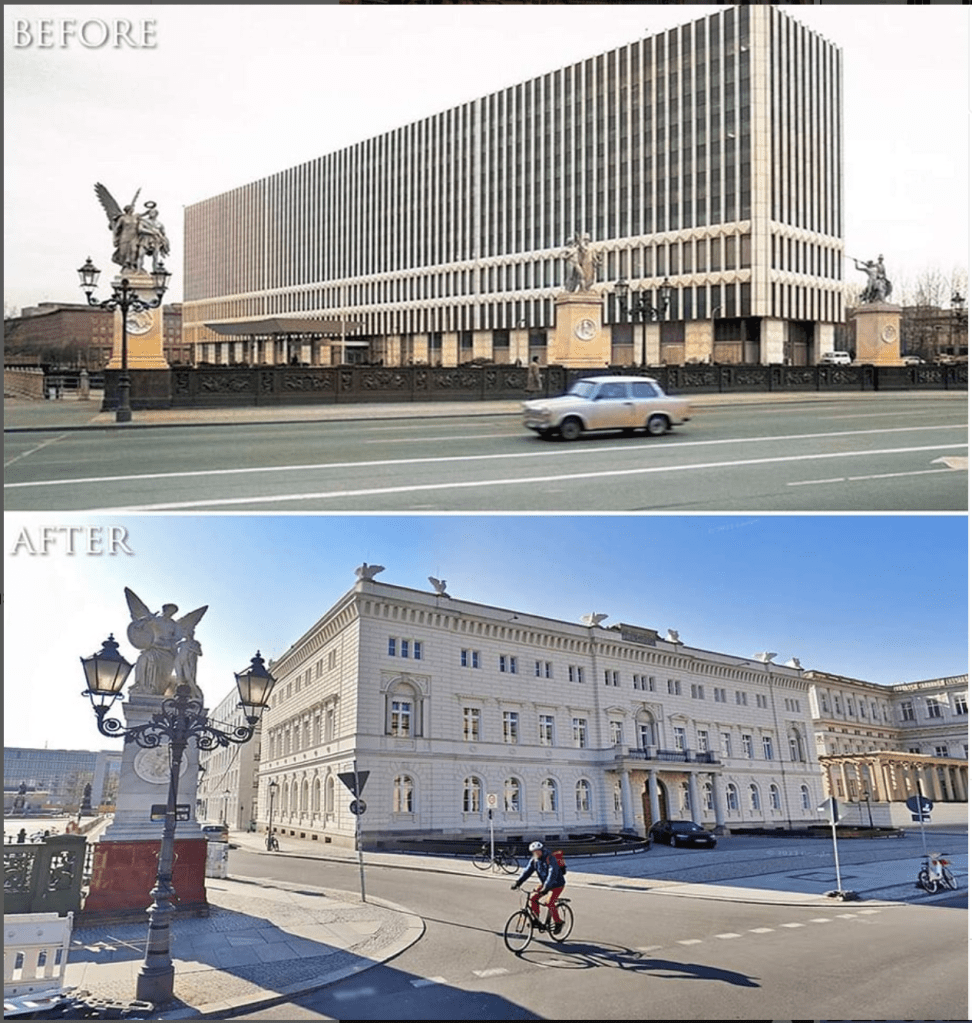
The video starts off by stating that the reason that many tourists visit European capitals is because of those cities’ universally acclaimed beauty, which establishes the primary tenet of this specific application of the “culture wars” to architecture, that is, an object’s beauty is characterised by the perceived unanimous appreciation it receives from a specific crowd, or to put it simply in the terms of a frustrated Twitter user: “it is beautiful because everyone likes it”. This position provides the basic recipe for populism, which is always convinced to echo the deep convictions of a selected community that is constituted in a discriminatory manner, to the extent that the “majoritarian opinion” is a projection of the culturally privileged (and their wishful imitators). Aesthetic properties that are presented as reflecting the taste of the privileged community are therefore established as the ontological basis for the normativity of beauty. Echoing 19th Century romanticist theses(2) that claimed that unitary communities were the expression of specific national will and sensibility, such a definition of beauty evidently implies the incompatibility of different cultures cohabitating, as bound to behave competitively according to nature. As such, in the context of the dissemination of Western soft power around the world via the neoliberal system of international trade, this normative conception of beauty persists around the world despite the dismantlement of imperial colonies. This explains the global touristic appeal for European capitals, not because of their unique concentration of “beauty” as posited in the video, but rather as a byproduct of the globalisation of Eurocentric cultural norms.
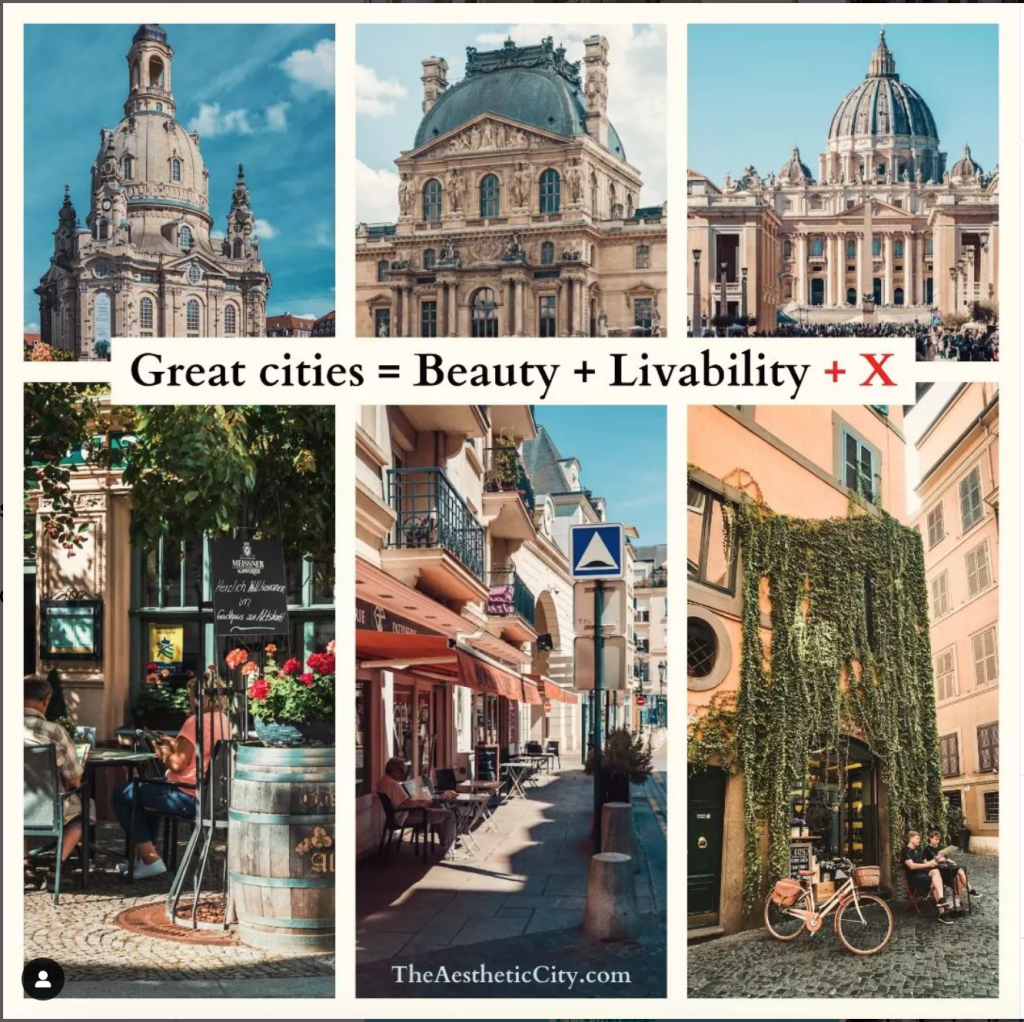
The idealisation of 19th Century architecture that is projected by these accounts reveal that their adherence to romanticist nationalism goes beyond the metaphysical sphere and is reflected by their exaltation of architectural properties that belong to a supremacist vernacular. As such, they praise cities like Paris or Vienna for their ordered and uniform structure of the urban fabric around spaces that celebrate national pride, which is a conform reflection of the nationalist idealisation of society, itself organised as a uniform body of repressed individuals transcended by historical glory of a selective elite who serve as the template for the rest of the body. This admiration is not made secret by the vanguard of this movement of historical revisionism, as can be observed in the content of Instagram creators who are motivated by a more artistic enterprise, which brims with the abundant mention of “perfection”, “transcendence”, “ascendance”, “glory”, which incessantly hearken back to a mythified past, and lays out an illiberal political programme that is not kept as a secret.
Indeed, this is completely admitted by the proponents of this doctrine, as the Aesthetic City video makes abundant reference to fiction author Roger Scruton, whose writings on aesthetic theory clarify the nature of those great figures who serve as model to the rest of the society. This fiction author has “written that homophobia is understandable” in the same way as repulsion towards incest(3). If he has since then admitted that sexuality is more complex, he maintains that homosexuality is an unnatural union(4). Evidently, his ideological and philosophical beliefs all pint against the acceptance of sexual minorities.
The exclusionary convictions do not stop here, as his article titled The Beauty of Belonging(5) places the neoplatonic conception of divine inspiration, or phutorgous, at the core of the doctrine of “beautiful architecture” by explaining that the architectural vernacular that cities must adhere to is one modelled after the architecture of the church, whose establishment and consecration must serve as the genesis of the fulfilment of “our deepest social need […] to belong in a place […] that is claimed as ours”. A sense of belonging that can therefore only be nurtured through mimesis of the artisan who was receptive to the divine exegetic message, by establishing rigid orders and rules inspired from divine architecture. This ideological aspect therefore explains the deep attachment to this concept of “objective beauty” by nationalists, as here, beauty, turned into a thing in itself, establishes the normative superiority of a given culture and foments ethnic expansion.
The video voices this exaltation of ethnic conquest and mythification of a bygone structuralism through the typical condemnation of a culture of individualism and “future oriented mindset” that are presented as thriving in architecture schools. The delirium that fantasises the ideological orientation of university curricula is typical of reactionary thought whose fundamental anti-intellectualism is reasoned by the need to maintain the primacy of doctrines that comfort the establishment. The affirmation among architecture students of individual subjectivity towards beauty naturally tends to subvert the artistic doctrines that justify and incite structural violence, as was the case after the May 1968 university revolts that had the outcome of shutting down the École des Beaux-Arts and shattering the preeminence of the State on the formation of artists and architects. As such, what is termed as “future oriented mindset” is to be understood as “subversive to our normative supremacy mindset”, and this subversion is thus blamed by the video to be caused by a process of brainwashing which produces an abnormally high sensitivity to “modern architecture” among students who have studied architecture. One of the studies mentioned in the video in a desperate attempt to provide unsound scientific backing to the idea that beauty is objective aligns with this view, as it demonstrates that people who have studied architecture tend to be more appreciative of “modern” architecture than the lesser educated public. However, the study as explained in the video is inconclusive to the argument as it fails to observe that there is not just one mode of appreciation that an individual may feel towards an object, ranging from the admiration of technical prowess to the metaphysical invitation of plenitude(6). This Kantian perspective actually subverts what is initially presented as the aim of the study, and provides instead an understanding of these results as a probing demonstration that the appreciation of different levels of subjectivity that one may have towards an object, and therefore questions the supposed objectivity and immobility of one’s perception of beauty.
When so much of philosophy has been dedicated to debating and exploring constructs of love and beauty, it is difficult to turn a blind eye to the totalitarian nature of the venture that these reactionary accounts have embarked on. Throughout this article, I have shown that rather than clearing doubts about their doctrine, the attempts to provide theoretical understanding of these beliefs have instead exposed the ideological alignment of these influencers. Influencers, because their content is devoid of any educational or architectural value and rather focus on developing a subconscious nationalist sentiment. Through the medium of architecture, these influencers play into the culture war and normalise a discourse that sees humans as creatures that are devoid of agency and act only in accordance to a will that surpasses them, and that is dictated and transmitted to them by an unchanging elite. In this world, there is no love, only reproductive instinct, no individuality, only one civilisational beauty. However, what these pseudo-architects deny most of all, is that the fathers of Neoclassicism would have admired Art Deco, that the fathers of Gothism would have admired brutalism, and that aesthetic excellence does not come from a phutourgos or a god, but from artists dedicated to subverting the absolutism of the establishment.
Bibliographical sources
(1) What Makes Buildings Beautiful (And Why Beauty Does Matter). YouTube Video. The Aesthetic City, 2022. https://www.youtube.com/watch?v=C9pg2j2oGy0.
(2) Principally developed in Schopenhauer’s The World As Will And Representation
(3) Edemariam, Aida. ‘Roger Scruton: A Pessimist’s Guide to Life’. The Guardian, 4 June 2010, sec. From the Guardian. https://www.theguardian.com/theguardian/2010/jun/05/roger-scruton-interview.
(4) Ibid.
(5) Scruton, Roger. ‘The Beauty of Belonging’. Plough, 29 November 2018. https://www.plough.com/en/topics/culture/art/the-beauty-of-belonging.
(6) Guillot, Apolline. ‘Le beau artistique au musée avec Kant’. Philosophie Magazine, 6 February 2024.
Photographic sources
(Figure 1) Gomnrz. Biblioteca Central de La UNAM. 19 September 2021. Image/jpeg. Wikimedia Commons. https://commons.wikimedia.org/wiki/File:Biblioteca_central_de_la_UNAM.jpg.
(Figure 2) ‘BERLIN BEFORE AND AFTER 😍👏’. Instagram post. @arch_uprising, 5 April 2024. https://www.instagram.com/p/C5Yia74oWYH/?utm_source=ig_web_copy_link&igsh=MzRlODBiNWFlZA==
(Figure 3) ‘What Makes a City Truly *great*, What Is the Secret Sauce? Is There Even a Universal Formula?’ Instagram post. @bart.Urban, @the.Aesthetic.City, 20 March 2024. https://www.instagram.com/p/C4vEQd8NdK_/?utm_source=ig_web_copy_link&igsh=MzRlODBiNWFlZA==.
 Identity Hunters
